
This chapter should be cited as follows:
Lin LH, Oliva E, Glob Libr Women's Med
ISSN: 1756-2228; DOI 10.3843/GLOWM.421993
The Continuous Textbook of Women’s Medicine Series – Gynecology Module
Volume 13
Gynecological cancer
Volume Editors:
Professor Hextan Ngan, Department of Obstetrics and Gynaecology, The University of Hong Kong, Hong Kong
Professor Karen Chan, Department of Obstetrics and Gynaecology, The University of Hong Kong, Hong Kong

Chapter
Pathology of Ovarian, Fallopian Tube and Primary Peritoneal Cancers
First published: May 2026
Study Assessment Option
By answering four multiple-choice questions (randomly selected) after studying this chapter, readers can qualify for Continuing Professional Development points plus a Study Completion Certificate from GLOWM.
See end of chapter for details.

INTRODUCTION
This chapter is intended to provide an overview of the salient pathology of malignant neoplasms arising primarily in the ovary, although some also can be seen in the Fallopian tube and peritoneum, focusing on recent advances and select relevant topics for gynecologists, oncologic gynecologic surgeons and medical oncologists. Ovarian pathology represents one of the most challenging areas in gynecologic pathology due to the wide range of primary tumors arising in this organ and the relatively frequent involvement of metastatic disease, which can mimic a primary neoplasm.
The main histologic subtypes of primary ovarian, tubal and peritoneal malignancies are summarized in Table 1. In this chapter, the following categories of tumors will be discussed: epithelial, sex-cord stromal, germ cell, mesenchymal and mixed epithelial-mesenchymal neoplasms, as well as metastatic/secondary involvement by extraovarian neoplasms. Staging of ovarian, Fallopian tube and peritoneal cancer according to the International Federation of Gynecology and Obstetrics (FIGO) is summarized in Table 2.1 Several distinctive neoplasms, either benign, borderline or malignant, may have an association with tumor predisposition genetic syndromes, outlined in Table 3.
1
Classification of main primary ovarian, tubal and peritoneal cancers based on WHO Classification of Female Genital Tumor (2020).2
Epithelial | High-grade serous carcinoma Low-grade serous carcinoma Endometrioid carcinoma Clear cell carcinoma Mucinous carcinoma Dedifferentiated/undifferentiated carcinoma Mesonephric-like carcinoma Malignant Brenner tumor Neuroendocrine carcinoma Mixed carcinoma Carcinosarcoma |
Sex cord stromal | Granulosa cell tumor, adult and juvenile types Sertoli-Leydig cell tumor Sertoli cell tumor Gynandroblastoma Sex cord tumor with annular tubules Steroid cell tumor, not otherwise specified and Leydig cell tumor |
Germ cell | Dysgerminoma Yolk sac tumor Immature teratoma Non-gestational choriocarcinoma Embryonal carcinoma Mixed germ cell tumor Somatic-type malignancies arising in teratoma |
Mesenchymal and mixed epithelial-mesenchymal | Endometrioid stromal sarcoma Leiomyosarcoma Adenosarcoma Extra-gastrointestinal stromal tumor Solitary fibrous tumor Desmoplastic small round cell tumor |
Others | Small cell carcinoma of ovary, hypercalcemic-type STK11 adnexal tumor Mesothelioma Hematologic malignancies |
2
FIGO stage for primary ovarian, tubal and peritoneal cancers.
I | Tumor confined to ovaries or Fallopian tube(s) | ||
IA | Tumor limited to one ovary (capsule intact) or Fallopian tube; no tumor on ovarian or Fallopian tube surface; no malignant cells in ascites or peritoneal washings | ||
IB | Tumor limited to both ovaries (capsules intact) or Fallopian tubes; no tumor on ovarian or Fallopian tube surface; no malignant cells in the ascites or peritoneal washings | ||
IC | Tumor limited to one or both ovaries or Fallopian tubes, with any of the following: | ||
IC1 | Surgical spill | ||
IC2 | Capsule ruptured before surgery or tumor on ovarian or Fallopian tube surface | ||
IC3 | Malignant cells in the ascites or peritoneal washings | ||
II | Tumor involves one or both ovaries or Fallopian tubes with pelvic extension (below pelvic brim) or peritoneal cancer | ||
IIA | Extension and/or implants on uterus and/or Fallopian tubes and/or ovaries | ||
IIB | Extension to other pelvic intraperitoneal tissues | ||
III | Tumor involves one or both ovaries or Fallopian tubes, or peritoneal cancer, with cytologically or histologically confirmed spread to the peritoneum outside the pelvis and/or metastasis to the retroperitoneal lymph nodes | ||
IIIA1 | Positive retroperitoneal lymph nodes only (cytologically or histologically proven) | ||
IIIA1(i) | Metastasis up to 10 mm in greatest dimension | ||
IIIA1(ii) | Metastasis more than 10 mm in greatest dimension | ||
IIIA2 | Microscopic extrapelvic (above the pelvic brim) peritoneal involvement with or without positive retroperitoneal lymph nodes | ||
IIIB | Macroscopic peritoneal metastases beyond the pelvis up to 2 cm in greatest dimension, with or without metastasis to the retroperitoneal lymph nodes | ||
IIIC | Macroscopic peritoneal metastasis beyond the pelvis more than 2 cm in greatest dimension, with or without metastasis to the retroperitoneal lymph nodes (includes extension of tumor to capsule of liver and spleen without parenchymal involvement of either organ) | ||
IV | Distant metastasis excluding peritoneal metastases | ||
IVA | Pleural effusion with positive cytology | ||
IVB | Parenchymal metastases and metastases to extra-abdominal organs (including inguinal lymph nodes and lymph nodes outside of the abdominal cavity) | ||
3
Tumor predisposition genetic syndromes and associated ovarian, tubal or peritoneal neoplasms.
Syndrome | Associated neoplasms |
Hereditary breast and ovarian cancer syndrome | High-grade serous carcinoma of ovary, Fallopian tube and peritoneum, serous tubal intraepithelial carcinoma (STIC) |
Lynch syndrome | Endometrioid, clear cell, dedifferentiated and undifferentiated carcinoma |
Peutz–Jeghers syndrome | Sex cord tumor with annular tubules (SCTAT), STK11 adnexal tumor, Sertoli cell tumor, gastric-type mucinous ovarian tumors, gastric-type synchronous multifocal lesions |
DICER1 syndrome | Sertoli-Leydig cell tumor, DICER1-related sarcoma/neoplasms |
Ollier disease and Maffucci syndrome | Juvenile granulosa cell tumor |
Rhabdoid tumor predisposition syndrome type 2 | Small cell carcinoma of the ovary, hypercalcemic type |
Familial adenomatous polyposis | Microcystic stromal tumor |
Nevoid basal cell carcinoma syndrome (Gorlin syndrome) | Fibroma (bilateral, multinodular and extensively calcified) |
von Hippel–Lindau syndrome | Clear cell papillary cystadenoma of broad ligament and steroid cell tumor |
Tuberous sclerosis complex | Perivascular epithelioid cell tumor (PEComa), PEComatosis, lymphangioleiomyomatosis (LAM) |
BAP1 tumor predisposition syndrome | Mesothelioma |
EPITHELIAL MALIGNANCIES (CARCINOMAS)
Carcinomas are the most common ovarian malignancies with the most frequent histologic subtype being high-grade serous carcinoma, followed by endometrioid carcinoma, clear cell carcinoma, low-grade serous carcinoma and mucinous carcinoma in order of frequency.3
High-grade serous carcinoma
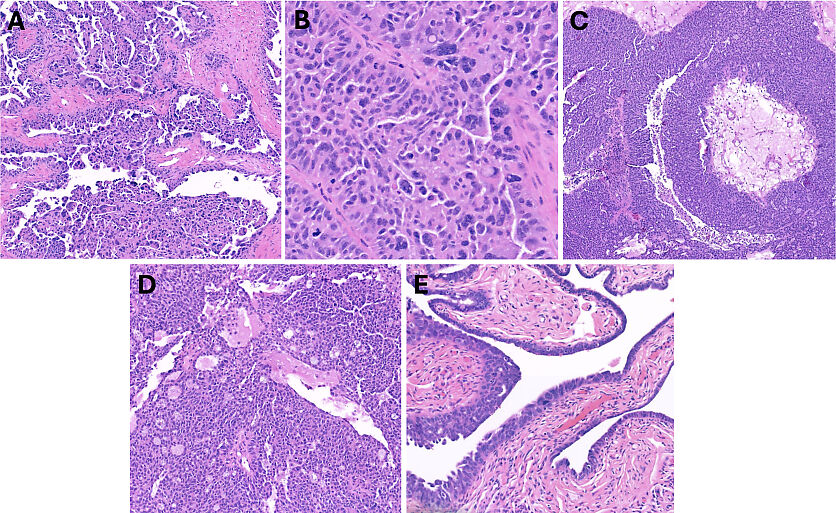
High-grade serous carcinoma is typically a very aggressive carcinoma, characterized by TP53 mutations and high-level copy-number alterations.4 Histologically, it is characterized by variably admixed slit-like, papillary, glandular, cribriform and/or solid patterns associated with cellular pseudo-stratification, high-grade nuclear atypia including significant pleomorphism, and brisk mitotic activity (>12 mitoses/10 high-power fields) (Figure 1A,B). Most of them exhibit mutant-type p53 expression (overexpression, null or cytoplasmic patterns)5 and are WT-1 and estrogen receptor positive on immunohistochemistry.6
1
High-grade serous carcinoma. (A) Papillary architecture and cell stratification. (B) Slit-like spaces and marked cytologic atypia. (C,D) Transitional-like morphology in a solid, pseudoendometrioid and transitional (SET) pattern. (E) Serous tubal intraepithelial carcinoma.
High-grade serous carcinoma is the main gynecologic manifestation of the hereditary breast and ovarian cancer syndrome, most often associated with germline mutations in BRCA1/2 and less frequently RAD51C, RAD51D and BRIP1.7 An unusual morphologic appearance of this tumor has been described as solid, pseudo-endometrioid and transitional-like (SET) pattern (Figure 1C,D), associated with homologous recombination deficiency (HRD) due to somatic or germline alterations,8,9 which predicts sensitivity to poly(ADP-ribose) polymerase (PARP) inhibitors.
Although the ovary was originally thought to be the primary origin of high-grade serous carcinoma, it is known now that most arise from serous tubal intraepithelial carcinoma (STIC), its precursor lesion typically present at the fimbriated end of the Fallopian tube.10,11 A small percentage arise in the ovary and peritoneum without obvious precursor lesion or tubal involvement12 (Figure 1E). Thus, the Fallopian tubes of patients with high-grade serous carcinoma are examined microscopically following the SEE-FIM (sectioning and extensively examining the fimbriated end) protocol to detect the precursor lesion.13
Advanced-stage high-grade serous carcinomas are typically treated with neoadjuvant chemotherapy and it is the role of the pathologist to assess the chemotherapy effect by assigning a chemotherapy response score (CRS) based on the amount of residual tumor involving the omentum (Table 4)14 as this site is thought to represent the most chemoresistant location of tumor involvement.
4
Chemotherapy response score (CRS).
CRS 1 | No or minimal tumor response |
CRS 2 | Appreciable tumor response amidst viable tumor, both readily identifiable and tumor regularly distributed |
CRS 3 | Complete or near-complete response with no residual tumor OR minimal irregularly scattered tumor foci seen as individual cells, cell groups or nodules up to 2 mm in maximum size |
Folate receptor alpha (FRα) immunohistochemistry has emerged as a companion predictive biomarker test to assess eligibility for the antibody–drug conjugate mirvetuximab soravtansine, with moderate to strong positivity in >75% of viable tumor cells considered a positive score,15 although this threshold remains under debate.
Low-grade serous carcinoma
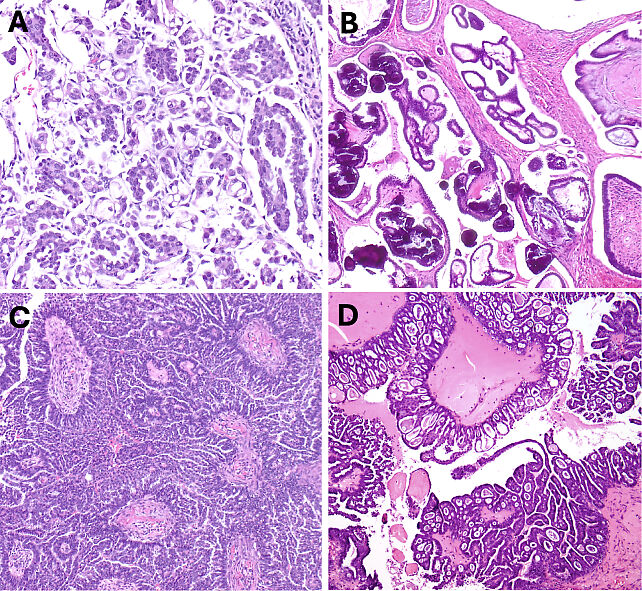
Low-grade serous carcinoma has a morphologic, immunohistochemical and molecular profile as well as clinical behavior that significantly differ from those of high-grade serous carcinoma. These tumors display a variety of patterns, including small nests, glands, papillae and inverted macropapillae often free floating in spaces associated with low-grade nuclear atypia (<3x variation in size) and low mitotic activity (<12 mitoses/10 high-power fields) (Figure 2A,B). A background of serous borderline tumor may be seen in association with a low-grade serous carcinoma. Serous borderline tumors with micropapillary or cribriforming architecture (Figure 2C,D) are more frequently associated with or at increased risk of progressing to low-grade serous carcinoma.16,17 The most common molecular alterations involve the RAS and RAF pathway (KRAS, NRAS and BRAF) with wild-type p53 expression (heterogeneous expression) and positivity for estrogen receptor and WT-1.6 Low-grade serous carcinoma is characterized by a relatively indolent behavior when compared to high-grade serous carcinoma.18,19,20 Rarely, low-grade serous carcinoma may show high-grade transformation,21 which behaves more aggressively and has been shown to acquire additional molecular alterations such as TP53.21
2
Low-grade serous carcinoma. (A) Free floating small nests/papillae and micropapillae. (B) Inverted macropapillae. (C) Micropapillary (resembling a medusa head) and (D) cribriforming architecture in a borderline component.
Endometrioid carcinoma
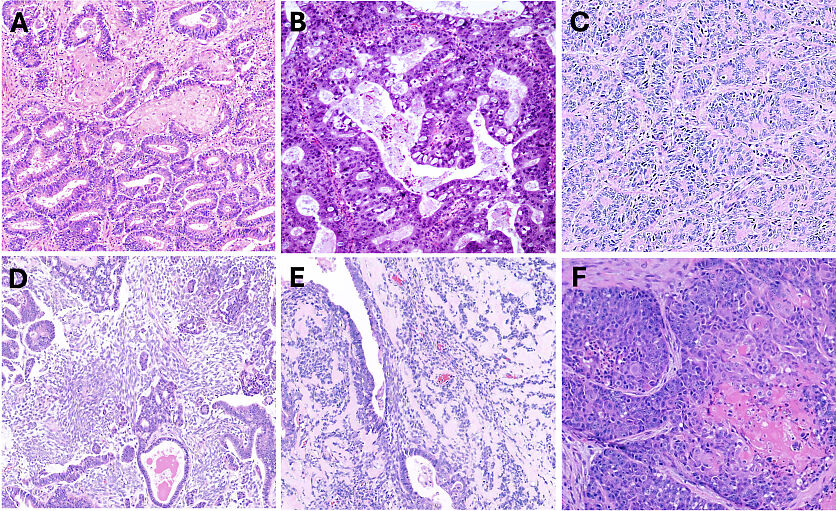
Endometrioid carcinoma is often seen in association with endometriosis (endometriotic cyst) or adenofibroma and shows the same morphologic characteristics as those of its endometrial counterpart with relatively well-formed glands often back-to-back or cribriforming (Figure 3A) that may coexist with papillary and solid architectural patterns. As in the endometrium, these tumors are graded depending on the percentage of solid component (Grade 1, <5%; Grade 2, 5–50%; Grade 3, >50%) and nuclear atypia (Grade 1 and 2 carcinomas with high-grade nuclear atypia are upgraded by one grade). Presence of squamous and mucinous differentiation (Figure 3A,B) are confirmatory features of an endometrioid carcinoma. However, endometrioid carcinoma in the ovary can show a wide morphologic spectrum with variants that may closely mimic other ovarian tumors, including sex-cord like morphology with cords, trabeculae or small tubules (mimicking granulosa cell tumor, Sertoli cell tumor or Sertoli-Leydig cell tumor) (Figure 3C),22 spindled cells (mimicking carcinosarcoma) (Figure 3D),23 corded and hyalinized (CHEC) (mimicking carcinosarcoma) (Figure 3E),24 with extensive secretory change (mimicking clear cell carcinoma) and pilomatrixoma-like (mimicking squamous cell carcinoma) (Figure 3F).25,26 Nuclear beta-catenin positivity by immunohistochemistry and mutations in CTNNB1 are characteristic of sex cord-like, spindled, corded and hyalinized, and pilomatrixoma-like variants,25,27,28 which often lack PAX8 expression (a commonly used Müllerian marker). Seromucinous carcinomas are currently considered a variant of endometrioid carcinoma with prominent mucinous differentiation due to their significant histologic and molecular overlap.29
3
Endometrioid carcinoma. (A) Squamous differentiation. (B) Mucinous differentiation. (C) Sex cord-like morphology. (D) Spindled transitioning to glands with low-grade cytologic features. (E) Corded and hyalinized (CHEC). (F) Pilomatrix-like with basaloid appearance and ghost cells.
Ovarian endometrioid carcinoma can co-occur with an endometrial endometrioid carcinoma and, based on pathologic criteria, are classified as low-risk (synchronous or independent primaries) or high-risk (advanced stage metastatic tumor). This distinction is important since low-grade, low-stage, synchronous primaries have indolent behavior30,31 while metastatic tumors are more aggressive and require adjuvant therapy.32 The finding of distinct histology in both tumors, presence of precursor lesion (atypical hyperplasia/endometrial intraepithelial neoplasia in the endometrium and endometriosis or adenofibroma in the ovary), absence or only early myometrial invasion, absence of lymphovascular invasion, unilateral ovarian involvement with no surface involvement and absence of other sites of metastasis support independent primaries.32 Despite the favorable outcome of tumors classified as independent by pathologic criteria, targeted next-generation sequencing has demonstrated that the vast majority of co-occurring ovarian and endometrial endometrioid carcinomas are clonally related, likely explained by migration of abnormal endometrial tissue to the ovary.33,34 Rare examples of clonally independent tumors have been reported in the setting of cancer predisposition syndromes (Lynch syndrome and constitutional mismatch repair-deficiency syndrome).35 The most common molecular alterations in endometrioid carcinoma involve PTEN, PIK3CA, ARID1A, CTNNB1 and KRAS genes.36 High-grade endometrioid carcinomas may show aberrant p53 expression with associated TP53 mutations. Approximately 7–14% of endometrioid carcinomas exhibit mismatch repair protein deficiency37,38 and can be associated with Lynch syndrome.
Clear cell carcinoma
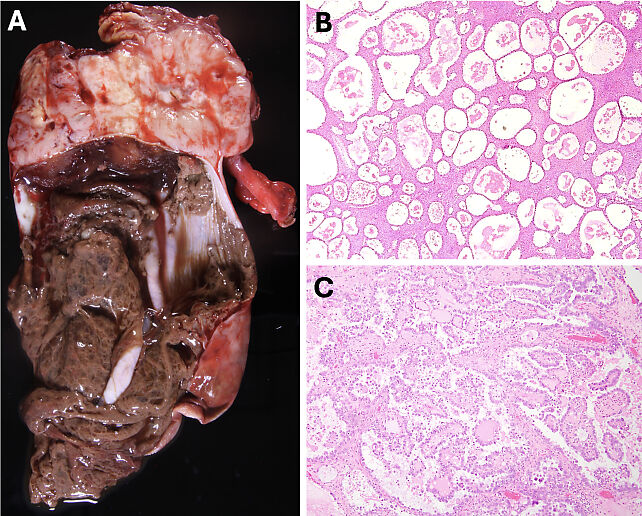
Clear cell carcinoma is characterized by tubulocystic, papillary and solid architectural patterns often associated with hyalinized stroma (Figure 4). The tumor cells can exhibit clear or eosinophilic cytoplasm and typically display uniform nuclear atypia with hobnailing and minimal pseudo-stratification in contrast to high-grade serous carcinoma.39 They usually lack estrogen and progesterone receptor expression and are positive for Napsin-A, AMACR and HNF1-beta.39,40 p53 immunostain shows mutant-type pattern in 5–24% of clear cell carcinomas.39,41,42 The classic grading systems do not reliably predict prognosis in these tumors43 and they are considered by definition high-grade. Stage is the most important predictor of outcome, with patients with early-stage tumors showing good outcomes, while advanced disease is associated with unfavorable prognosis and poor response to adjuvant treatment.44,45,46 Clear cell carcinoma harbors frequent molecular alterations in ARID1A and PIK3CA genes.47,48 It is important to note that clear cell carcinoma may be associated with paraneoplastic manifestations including thromboembolic events,49 hypercalcemia,50 and rare presentations such as cerebellar degeneration51 and bilateral diffuse uveal melanocytic proliferation.52
4
Clear cell carcinoma. (A) Large polypoid mass arising within an endometriotic cyst. (B) Tubulocystic pattern in an adenofibromatous background. (C) Papillary architecture with hyalinization and hobnailing cells with clear to eosinophilic cytoplasm.
As noted in endometrioid carcinoma, clear cell carcinoma often arises from endometriosis and can be associated with Lynch syndrome.53 These two tumor types can co-occur and represent the most common type of mixed ovarian carcinoma.54,55 Both can be categorized into four prognostically relevant molecular groups according to The Cancer Genome Atlas (TCGA) endometrial cancer classification and PROMISE algorithm: POLE-ultramutated, mismatch repair-deficient (MMRd)/microsatellite instability-high (MSI-H), no specific molecular profile (NSMP)/copy number low, and p53-abnormal/copy-number high.36,48,56 POLE-mutant tumors are associated with favorable outcomes, p53-abnormal carcinomas have the worst outcomes, and MMRd and NSMP have an intermediate prognosis.41,57,58
Undifferentiated carcinoma
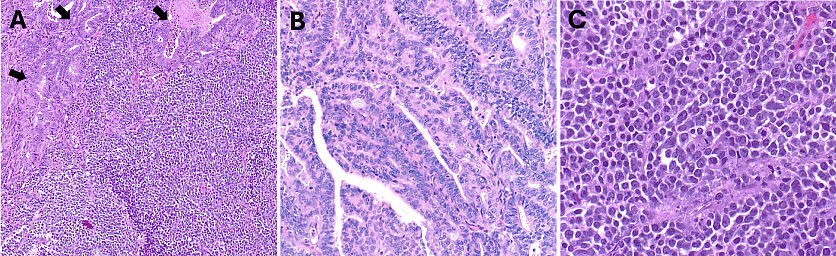
Undifferentiated carcinoma is a highly aggressive tumor that lacks morphologic and robust immunohistochemical evidence of epithelial lineage and is characterized by diffuse growth of non-cohesive cells that may show focal rhabdoid morphology. When an undifferentiated carcinoma is associated with an identifiable carcinoma, typically low-grade endometrioid (other subtypes can also be seen), it is referred to as 'dedifferentiated carcinoma'59,60 (Figure 5). Undifferentiated and dedifferentiated carcinoma often lack expression of Müllerian and common epithelial markers but can be focally and weakly positive for claudin4, EMA and cytokeratin18. They frequently show abnormal expression of SWI/SNF (SWItch/Sucrose Non-Fermentable) complex components (ARID1A/B, SMARCA2/BRM, SMARCA4/BRG and SMARCB1/INI1) (82%), mismatch repair protein deficiency (26%), and mutant-type p53 pattern (10%).59,60,61 It is important to be aware that these tumors may not be detected in the primary setting (due to sampling issues) and be present only as metastatic disease, which can make the diagnosis extremely challenging as numerous undifferentiated neoplasms are in the differential diagnosis, including sarcomas and melanoma, among others.
5
Dedifferentiated carcinoma. (A) Undifferentiated component (lower right) juxtaposed to well-differentiated endometrioid carcinoma (upper left; arrows). (B) Well-formed glands in differentiated component. (C) Undifferentiated component displays sheets of non-cohesive cells with brisk mitotic activity.
Mucinous carcinoma
Mucinous tumors can be diagnostically challenging due to their marked intratumoral heterogeneity, underscoring the importance of comprehensive sampling guided by careful gross examination and clinical findings. The differential diagnosis of an ovarian mucinous neoplasm includes primary mucinous carcinoma arising in mucinous borderline tumor, primary mucinous carcinoma arising in a teratoma, endometrioid carcinoma with extensive mucinous differentiation (seromucinous carcinoma), metastatic/secondary involvement by mucinous tumor and rarely Sertoli-Leydig cell tumor with prominent heterologous mucinous component.62
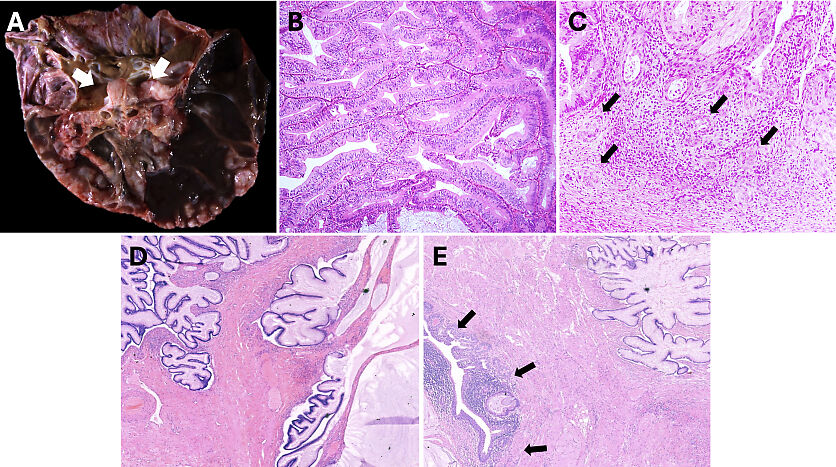
Mucinous carcinoma is diagnosed based on the presence of expansile and/or infiltrative (destructive) growth (Figure 6A–C). Expansile pattern, by far the most common, is characterized by confluent growth of atypical mucinous glands with minimal or absent intervening stroma (Figure 6B). Infiltrative growth is defined by irregular, angulated, sometimes poorly formed glands, tumor nests or single cells within a desmoplastic stroma (Figure 6C). The pattern of invasion is a better predictor of behavior than the different grading classifications used in these tumors, with infiltrative growth being associated with worse prognosis.63 A histologic pitfall of destructive invasion includes ruptured mucinous glands with mucin extravasation and associated stromal response, particularly when seen as small tumor nests; in this instance, histiocytes are often noted and the neighboring glands are not overtly malignant, which may help support the absence of an infiltrative growth64 Rarely, ovarian mucinous neoplasms, more often borderline mucinous tumors (with or without intraepithelial carcinoma) can harbor mural nodules, which are classified as sarcoma-like, anaplastic carcinoma or sarcoma.65,66 The former has no prognostic impact, but anaplastic carcinomas and sarcomas are associated with a worse prognosis when compared to usual mucinous carcinomas.67,68,69,70 Mucinous carcinomas can harbor molecular alterations in CDKN2A, KRAS, TP53 and ERBB2 amplifications, in order of frequency.71 Anaplastic carcinoma may be associated with SWI/SNF alterations, especially when displaying a rhabdoid morphology, but its clinical significance is not currently clear.72
6
Mucinous carcinoma. (A) Solid areas (white arrows) within a large multicystic mass correspond to mucinous carcinoma arising in a background of borderline tumor. (B) Expansile invasion. (C) Destructive/infiltrative invasion (arrows indicate infiltrating tumor cells). (D,E) Low-grade mucinous neoplasm arising in a teratoma resembling tumor of appendiceal origin (arrows in E indicate teratomatous elements represented by respiratory epithelium with underlying lymphoid infiltrate).
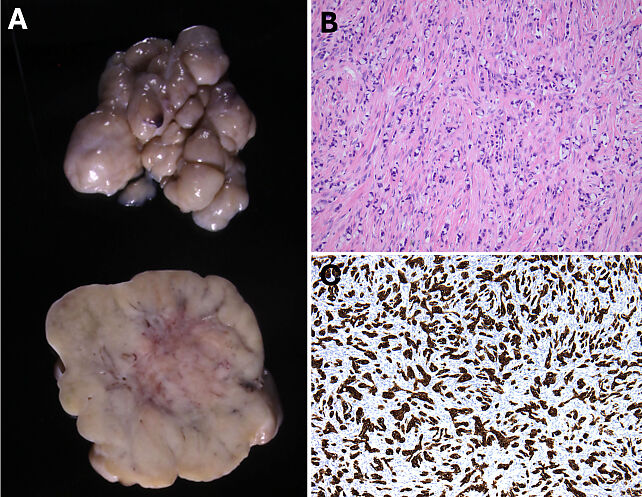
Metastatic adenocarcinomas and mucinous neoplasms secondarily involving the ovary, typically arising from the gastrointestinal tract, pancreatobiliary system or cervix, can mimic primary ovarian mucinous carcinomas and sometimes even borderline tumors.73,74,75,76,77 A combination of clinicopathologic features and immunohistochemical findings can be helpful in the differential diagnosis.62 Large (>10–13 cm), unilateral ovarian tumors without surface involvement or lymphovascular invasion would favor a primary carcinoma.78 On the contrary, the finding of pseudomyxoma peritonei, surface ovarian involvement, nodularity (Figure 7A), discordance between degree of architectural complexity and cytologic atypia, signet ring cells (Figure 7B,C), single infiltrating cells, and absence of background mucinous borderline or teratoma are more in keeping with metastases. However, one should be aware that many exceptions to these guidelines exist, especially when dealing with metastatic pancreatobiliary tumors that may closely mimic a primary ovarian tumor while the extraovarian tumor may be very small.75,76 Molecular profiling of both ovarian and extraovarian tumor can aid in establishing their clonal relationship, particularly in challenging cases.79
7
Metastatic mucinous carcinoma with signet ring cells from gastric origin (Krukenberg tumor). (A) Multinodular, solid, bilateral ovarian masses. (B) Numerous signet ring cells infiltrating fibromatous stroma. (C) Cytokeratin highlights signet ring cells.
A common origin of secondary ovarian involvement is the appendix; therefore, in the setting of a mucinous neoplasm involving the ovary that is associated with extravasated mucin on the peritoneum (pseudomyxoma peritonei), ovarian or Fallopian tube surfaces, the appendix needs to be examined intraoperatively and excised even when thought to be grossly normal. Appendiceal neoplasms involving the ovary typically show abundant extracellular dissecting mucin, hypermucinous tall cells with scalloped contours and subepithelial clefts within the ovary.80 Mucinous neoplasms arising from a teratoma (Figure 6D,E) are indistinguishable morphologically and immunohistochemically from appendiceal mucinous neoplasms;81 thus, comprehensive sampling is recommended to reveal the teratomatous components of the tumor.
The immunohistochemical profile of primary and metastatic mucinous carcinomas shows significant overlap with variable positivity for CK7, CK20 and CDX2. PAX8 is negative in more than half of primary mucinous carcinomas.82 With exception of tumors arising in teratoma, SATB2 is typically negative in primary ovarian mucinous but positive in metastatic carcinomas from the lower gastrointestinal tract.83 Loss of SMAD4 is frequent in pancreatic tumors and uncommon in primary ovarian mucinous carcinoma with rare exceptions.84,85 Ultimately, if there is suspicion of metastasis, correlation with imaging and other pertinent tests is recommended.
Mesonephric-like carcinoma
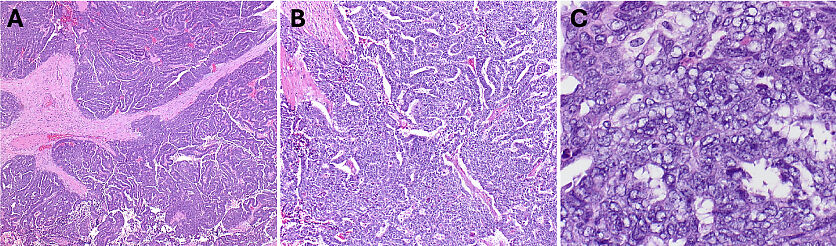
Mesonephric-like carcinoma is a newly reported subtype of adenocarcinoma associated with an aggressive behavior and a tendency to metastasize to the lungs. It is characterized by a diverse array of architectural patterns (glandular, cribriforming, papillary, sieve-like, glomeruloid), ovoid, cuboidal to spindle cells with scant cytoplasm (imparting a basaloid or blue appearance on low power), nuclear grooves and nuclear clearing (papillary thyroid carcinoma-like nuclear features) (Figure 8).86,87,88 They may be pure or associated with another Müllerian epithelial neoplasm (serous, endometrioid or mucinous). As there is significant morphologic overlap with endometrioid carcinoma, by definition, mesonephric-like carcinoma should lack squamous or mucinous differentiation and be negative or only minimally positive for estrogen and progesterone receptors. GATA3 and/or TTF1 positivity support the diagnosis. Despite their aggressive behavior, these tumors show p53 wild-type pattern.89 KRAS mutations are the most common molecular alteration and expression of mismatch repair proteins is preserved.90,91
8
Mesonephric-like adenocarcinoma. (A) Papillary architecture and 'blue' appearance due to high nuclear-to-cytoplasmic ratio. (B) Glandular and solid patterns mimic endometrioid carcinoma. (C) Cells with ovoid nuclei and prominent clearing, reminiscent of papillary thyroid carcinoma.
Carcinosarcoma
Carcinosarcoma is an aggressive malignant neoplasm harboring both carcinomatous and sarcomatous components. Its clinical behavior and pattern of spread is more akin to carcinomas despite the presence of malignant mesenchymal elements, which are thought to represent transdifferentiation from the malignant epithelial component.92,93 The latter is more often a serous carcinoma although, not infrequently, a hybrid serous-endometrioid morphology is noted. The mesenchymal component can be homologous or may have heterologous elements with chondrosarcomatous and rhabdomyoblastic differentiation commonly seen. Metastatic and recurrent disease typically present as pure carcinoma. Carcinosarcoma is typically characterized by TP53 mutations although a small subset is associated with mismatch repair protein deficiency and, rarely, TP53-wild-type tumors with mismatch repair proficiency are observed.94,95,96
MALIGNANT SEX CORD STROMAL TUMORS
This category of neoplasms is distinctive to the gonads and can be associated with hormonal manifestations and malignant behavior. Immunohistochemistry is helpful in establishing a sex cord stromal origin of tumors as they are calretinin (less specific), inhibin, SF-1 and FOXL2 positive (except if poorly differentiated); however, it is of limited utility to differentiate among histologic subtypes within this category. The most common sex cord stromal tumor with malignant potential is granulosa cell tumor, which is classified into adult and juvenile types.
Adult granulosa cell tumor
Adult-type granulosa cell tumor is seen predominantly in adult patients with peak incidence between 50–55 years. Due to their estrogenic production, patients are at increased risk of developing endometrial hyperplasia and carcinoma. Serum inhibin may be helpful in the preoperative setting and monitoring for recurrence.97 Adult granulosa cell tumor may be associated with hemoperitoneum98 and grossly can be extensively hemorrhagic and necrotic, simulating a carcinoma. It can show a diverse array of histologic patterns including nested, trabecular, insular, macrofollicular or diffuse (Figure 9A,B). The tumor cells are typically ovoid with inconspicuous nucleoli, nuclear grooves (resembling coffee beans) (Figure 9C), variable mitotic activity and can form Call-Exner bodies (small, rounded spaces surrounded by palisaded tumor cells). Some have prominent fibromatous stroma (mimicking cellular fibroma) or prominent thecoma-like foci (mimicking a thecoma).99,100 Reticulin stain showing reticulin fibers around tumor cell clusters is helpful to support a diagnosis of granulosa cell tumor in addition to mutation analysis with FOXL2 mutations, present in most of such tumors.100,101 Rarely, other pathogenic variants have been reported in the absence of FOXL2 mutations, including in the FGFR1 gene.102,103 TERT promoter mutations have been linked to aggressive and recurrent disease,104,105 which can occur many years after the initial diagnosis.106 Recent studies have demonstrated the potential utility of FOXL2 and TERT promoter mutation detection via circulating tumor DNA in the primary diagnosis and monitoring of recurrence of adult granulosa cell tumors.107,108 These tumors may show high-grade transformation, characterized by areas with an undifferentiated morphology associated with high-grade nuclear atypia and brisk mitotic activity juxtaposed to typical areas of adult granulosa cell tumor. High-grade transformation has been linked to the presence of TP53 mutations and aggressive clinical behavior.109
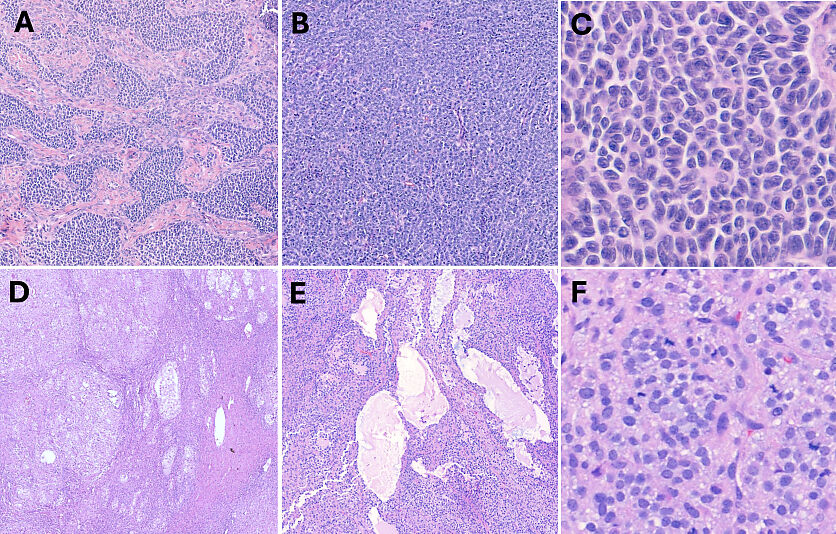
9
(A–C) Adult granulosa cell tumors, showing trabecular/insular (A) and (B) diffuse patterns, and cells with scant cytoplasm and ovoid, grooved nuclei (C). (D–F) Juvenile granulosa cell tumors, showing nodular growth (D), irregular follicles (E) and cells with abundant pale to eosinophilic cytoplasm lacking grooves (F).
Juvenile granulosa cell tumor
Juvenile-type granulosa cell tumor, in contrast to the adult counterpart, is typically seen in the first three decades of life. Patients with Ollier disease and Maffucci syndrome are at increased risk of developing this type of granulosa cell tumor.110 It often displays a nodular or diffuse architecture with formation of variably sized follicles (Figure 9D,E). The tumor cells lack grooves and show ample, pale to eosinophilic cytoplasm and variable mitotic activity (Figure 9F). A variety of mutations have been reported in these tumors, including AKT1, GNAS, IDH1 and IDH2, while FOXL2 mutations are consistently absent.111 The presence of anaplasia, defined as sheet-like growth, marked cytologic atypia, necrosis and brisk mitotic activity compared to background conventional morphology, has been associated with poorer prognosis, TP53 mutations and MYC amplifications/gains.112
Sertoli-Leydig cell tumor
Sertoli-Leydig cell tumor is composed of Sertoli and Leydig cells and is typically associated with androgenic manifestations, although some may present with estrogenic symptoms and, rarely, elevated alpha-fetoprotein (AFP) levels.113,114 This tumor is also part of the spectrum of gynecologic tumors that can be seen in patients with DICER1 tumor predisposing syndrome, which also includes cervical embryonal rhabdomyosarcomas115 and emerging DICER1-altered sarcomas/neoplasms (some resembling pleuropulmonary blastoma).116,117 Sertoli-Leydig cell tumor is classified as well-, moderately and poorly differentiated depending on the appearance of the Sertoli cell component. Well-differentiated tumors display well-formed Sertoli tubules intermixed with variably conspicuous Leydig cells and are considered clinically benign (Figure 10A). Moderately differentiated neoplasms are characterized by a vaguely nodular architecture, with nests, trabeculae and poorly formed tubules of Sertoli cells and peripheral and/or closely admixed Leydig cells (Figure 10B). The diagnosis of a poorly differentiated Sertoli-Leydig cell tumor can be very challenging, since it is composed of mitotically active spindled cells (Figure 10C), sometimes indistinguishable from a sarcoma. Sampling is crucial to identify a minor component of moderately differentiated Sertoli-Leydig cell tumor to establish this diagnosis. Moderately and poorly differentiated tumors can display heterologous elements, most commonly mucinous epithelium (which may rarely may be the most salient component), as well as skeletal muscle and fetal cartilage118,119 and retiform morphology120 (Figure 10D–F). It is crucial to exclude the possibility of overgrowth by embryonal rhabdomyosarcoma in moderate to poorly differentiated tumors as this indicates poorer prognosis.119 Moderately and poorly differentiated Sertoli-Leydig cell tumors can show malignant behavior and are typically characterized by DICER1 mutations,121,122 not seen in well-differentiated tumors.123
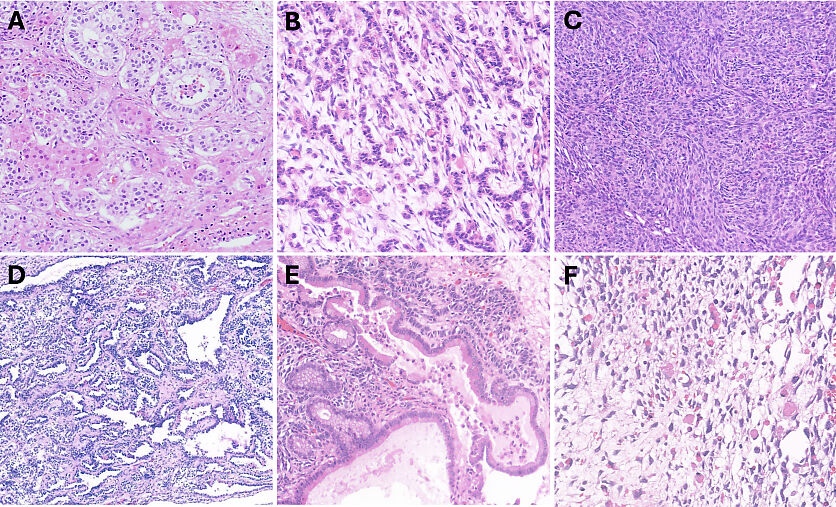
10
Sertoli-Leydig cell tumors. (A) Well-differentiated with Sertoli tubules and abundant Leydig cells. (B) Moderately differentiated with Sertoli cells forming trabeculae and scant Leydig cells. (C) Poorly differentiated with spindle cells mimicking a sarcoma. (D) Retiform pattern. (E) Heterologous mucinous elements. (F) Rhabdomyosarcomatous differentiation.
Gynandroblastoma
Gynandroblastoma is a neoplasm exhibiting a variable mixture of granulosa cell and Sertoli-Leydig cell components. Recent molecular data have shown that tumors with admixed juvenile granulosa and Sertoli-Leydig morphology harbor DICER1 alterations124 and, in conjunction with the clinicopathologic characteristics, support that these neoplasms could represent Sertoli-Leydig cell tumor with follicular differentiation.125 Tumors showing predominant adult granulosa morphology, with areas of hollow or solid tubules resembling Sertoli cell tumors, do not harbor DICER1 mutations and, in a subset, exhibit FOXL2 mutations and copy-number gains.103
Sex cord tumor with annular tubules
Sex cord tumor with annular tubules (SCTAT) is a rare distinctive neoplasm associated with Peutz–Jeghers syndrome in a subset.126 Its histological appearance is characteristic, with sharply demarcated, round nests and tubules containing basement membrane-like material. Tumor cells are columnar, with pale cytoplasm and basally located nuclei at the periphery of the nests, whereas cells in the inner portion are polarized towards the centers of the tubules (Figure 11A–C).126,127 In patients with Peutz–Jeghers syndrome, tumors are frequently bilateral, microscopic and incidental findings (Figure 11B,C) associated with benign behavior, as opposed to tumors in patients without Peutz–Jeghers syndrome, which present as a unilateral expansile mass (Figure 11A) with potential malignant behavior.127,128
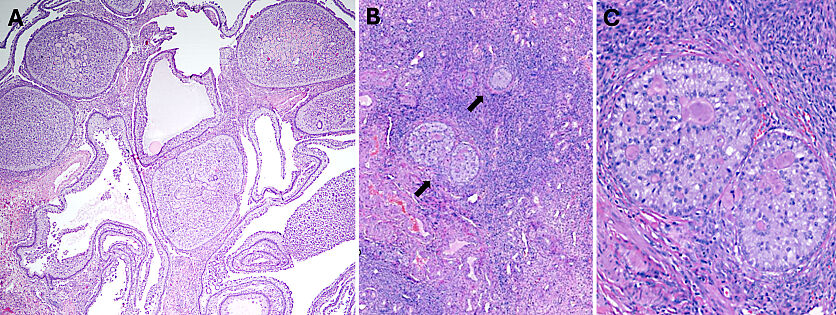
11
Sex cord tumor with annular tubules (SCTAT). (A) Tumor in a non-syndromic patient with large nests, some with secondary cystic change, forming a large unilateral mass. (B–C) Microscopic, rounded tumor nests (arrows), composed of tubules with basement-membrane-like material and antipodal distribution of nuclei, in a patient with Peutz–Jeghers syndrome.
Steroid cell tumor
Steroid cell tumor (not otherwise specified) can be associated with hormonal manifestations, most commonly androgenic,129 and may rarely present with Cushing syndrome130 or estrogenic symptoms.131 This tumor is characterized by nests and sheets of large polygonal cells with voluminous eosinophilic, clear to foamy cytoplasm with prominent nucleoli (Figure 12). While predicting clinical behavior of these neoplasms is challenging, several pathologic features have been associated with malignant behavior, including older age (>65 years), large tumor size (>7 cm), increased mitotic activity, necrosis, hemorrhage and marked cytologic atypia.129,132 Steroid cell tumors can harbor VHL mutations and be a manifestation of von Hippel Lindau disease.133
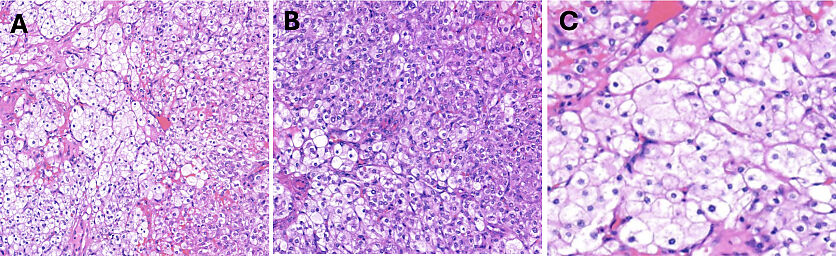
12
Steroid cell tumor (not otherwise specified). Tumor cells displaying abundant clear (A) to eosinophilic (B), foamy (C) cytoplasm with delicate vasculature.
MALIGNANT GERM CELL TUMORS
Germ cell tumors typically occur in the first three decades of life and secrete different proteins, which can be detected in blood and serve as biomarkers. Immunohistochemical stains in conjunction with morphologic features are helpful in the differential diagnosis of germ cell tumors. A common and helpful feature in malignant germ cell tumors is the finding of chromosome 12 abnormalities, typically isochromosome 12p or 12p amplifications,134,135,136 except for immature teratomas, unless when part of a mixed germ cell tumor.137
Dysgerminoma
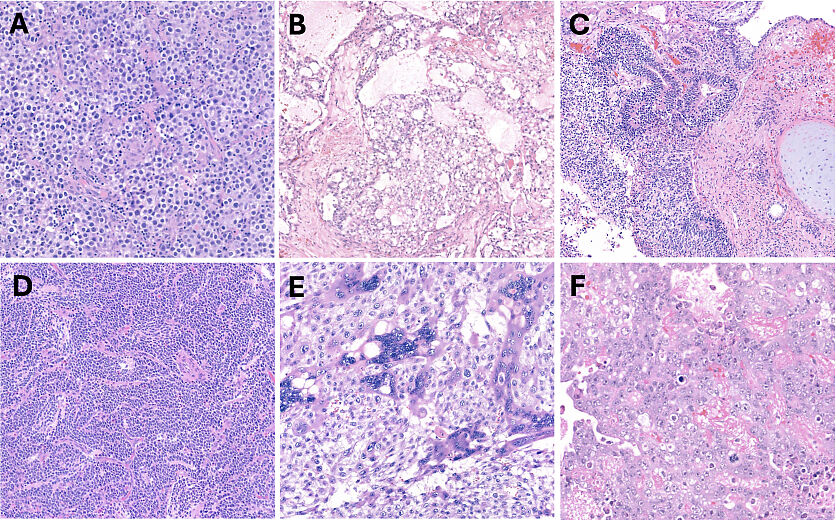
Dysgerminoma is the most common malignant ovarian germ cell tumor (Figure 13A). Patients typically show elevated serum lactate dehydrogenase (LDH) levels and rarely human chorionic gonadotropin (hCG) levels (in tumors with syncytiotrophoblast cells). It rarely may be associated with hypercalcemia.138 Dysgerminoma is also the most common germ cell tumor in patients with gonadal dysgenesis and can arise in a background of gonadoblastoma (in-situ tumor).139,140 Grossly, it is typically unilateral and has a homogeneous soft creamy cut surface. Morphologically, it is characterized by sheets and nests of monotonous polygonal cells with abundant clear or eosinophilic cytoplasm, large nuclei with one or more prominent nucleoli separated by thin fibrous septa associated with a lymphocytic infiltrate.141 Rarely, scattered syncytiotrophoblast cells (this finding in isolation should not prompt diagnosis of choriocarcinoma) and poorly formed small granulomas can be seen.142 Dysgerminomas are positive for SALL4, OCT3/4, CD117 and D2–40143 and often show KIT mutations and amplifications144 although other molecular alterations have also been reported. Disease free survival in patients with dysgerminoma is approximately 90% at 5 years with stage being the best predictor of outcome.145,146,147
13
Malignant germ cell tumors. (A) Dysgerminoma: rounded to polygonal, monotonous tumor cells with clear cytoplasm, delicate fibrous septa and associated lymphocytic infiltrate. (B) Yolk sac tumor: reticular and microcystic patterns and cells with cytoplasmic clearing. (C) Immature teratoma: immature neuroepithelium (defining feature), fetal-type cartilage and squamous epithelium. (D) Embryonic-type neuroectodermal tumor/primitive neuroectodermal tumor (ENT/PNET): overgrowth of primitive, small, round blue cells. (E) Choriocarcinoma: syncytiotrophoblast (multinucleated) and mononuclear trophoblast (cytotrophoblast and intermediate trophoblast) in a biphasic arrangement. (F) Embryonal carcinoma: high-grade primitive cells with brisk mitotic activity arranged in glandular and solid architecture (almost always as part of a malignant mixed germ cell tumor).
Yolk sac tumor
Yolk sac tumor is typically seen in patients in their second and third decades of life who present with symptoms/signs related to a fast-growing pelvic mass. It is typically associated with high serum alpha-fetoprotein (AFP) levels. Although in most cases it is pure, it may be a component of a mixed malignant germ cell tumor. On gross examination it is most frequently solid or solid and cystic with extensive areas of hemorrhage and necrosis. Histologically, multiple architectural patterns are seen, including reticular, micro- or macrocystic, solid, endodermal sinus (characterized by multiple Schiller-Duval bodies, composed of papillary structures lined by tumor cells with a central vessel free-floating within spaces), glandular, hepatoid, and polyvesicular vitelline, among others (Figure 13B). Tumor cells show clear cytoplasm and variable cytologic atypia and primitive appearance.148 Yolk sac tumors are positive for SALL4, glypican 3, GATA3, and AFP.143,149 Prognosis is dependent on stage with reported 5-year disease-free survival ≥95% for patients with Stage I–II, 71% for Stage III and 52% for Stage-IV tumors.150 Yolk sac tumors or other malignant germ cell tumors can be seen in older patients in association with Müllerian carcinomas and are considered of somatic derivation as they show the same molecular alterations of the carcinoma component and are distinct from the yolk sac tumors discussed in this section (germ cell origin).151,152,153,154,155
Immature teratoma
Immature teratoma is the third most common malignant germ cell tumor. It may rarely be associated with a variety of paraneoplastic manifestations including neurologic syndromes (anti-NMDA receptor encephalitis).156 It differs from mature cystic teratomas in its gross and microscopic characteristics as it is typically larger (median size of 16–20 cm; typically >8 cm) and presents as a solid or solid-cystic mass.157 Although a variety of ectodermal, mesodermal and endodermal tissues can be seen, many are similar to those seen in mature teratomas. The defining and prognostic histologic feature is the presence and extent of immature neuroepithelium, characterized by primitive, mitotically active, hyperchromatic cells forming tubules and rosettes (Figure 13C). Grading is established by quantifying the number of microscopic low-power fields occupied by immature neuroepithelium (Grade 1: ≤1 low-power field in any one slide; Grade 2: >1 and ≤3; Grade 3: >3).158,159 Currently these tumors are classified as low- (Grade 1) or high-grade (Grade 2 and 3). When the primitive neuroepithelium shows an expansile growth pattern without other intervening elements, the tumor is classified as an embryonic-type neuroectodermal tumor/primitive neuroectodermal tumor (ENT/PNET) (Figure 13D), which is associated with aggressive behavior.160 Both mature and immature teratomas may be associated with mature glial tissue in the peritoneum (gliomatosis peritonei).161 Grade and stage of immature teratomas play a major role in their prognosis, with the 5-year disease-specific survival being 90% with almost 100% survival in Grade-1 tumors and Stage-I disease162,163
Non-gestational choriocarcinoma
Non-gestational choriocarcinoma is rare and patients present with highly elevated serum hCG levels. It is grossly hemorrhagic and microscopically characterized by a biphasic population of highly atypical multinucleated (syncytiotrophoblast) and mononuclear (cytotrophoblast and less commonly intermediate trophoblast) cells associated with necrosis and hemorrhage (Figure 13E). Choriocarcinomas are positive for SALL4, hCG and inhibin.143,164 As the histologic features of non-gestational and gestational choriocarcinoma are identical, their differentiation is based on the clinical scenario and molecular findings by short-tandem repeat analysis, which compares alleles in the tumor with the patient’s non-neoplastic tissue to establish its origin.165
Embryonal carcinoma
Embryonal carcinoma is almost never seen in pure form but rather as a component of a malignant mixed germ cell tumor. It may show diffuse, glandular or papillary growth patterns composed of primitive cells with abundant amphophilic to clear cytoplasm, high-grade nuclear atypia, brisk mitotic activity and apoptosis (Figure 13F).166,167 Embryonal carcinoma is positive for SALL4, OCT3/4, CD30, and SOX2.143
MESENCHYMAL AND MIXED EPITHELIAL-MESENCHYMAL TUMORS
Primary ovarian, tubal and peritoneal mesenchymal or mixed epithelial-mesenchymal tumors are rare.168 Primary adnexal or peritoneal endometrioid stromal sarcoma and adenosarcoma are typically associated with endometriosis and are morphologically similar to their uterine counterparts with adenosarcomas being associated with a more aggressive behavior compared to their uterine counterpart.169,170,171 Leiomyosarcoma can arise in the adnexa and peritoneum from ligaments, smooth muscle metaplasia or vessel muscle wall.172,173,174 They exhibit marked nuclear atypia, brisk mitotic activity and/or tumor necrosis, similar to their uterine counterpart. Ovarian leiomyosarcoma shows aggressive behavior with frequent recurrent disease and poor clinical outcomes.173 Other less common malignant mesenchymal tumors that may occur in the ovary include perivascular epithelioid cell tumor (PEComa),175 inflammatory myofibroblastic tumor,176 solitary fibrous tumor,177 rhabdomyosarcoma,178 angiosarcoma,179 and liposarcoma,180 among others. Extra-gastrointestinal stromal tumor and desmoplastic small round cell tumor may involve secondarily the ovary.181,182 Carcinosarcoma is considered an epithelial neoplasm, in which a component undergoes transdifferentiation to a mesenchymal phenotype; therefore, it is discussed in the section above (epithelial malignancies – carcinomas).
OTHER MALIGNANT OVARIAN NEOPLASMS
Small cell carcinoma of ovary, hypercalcemic type
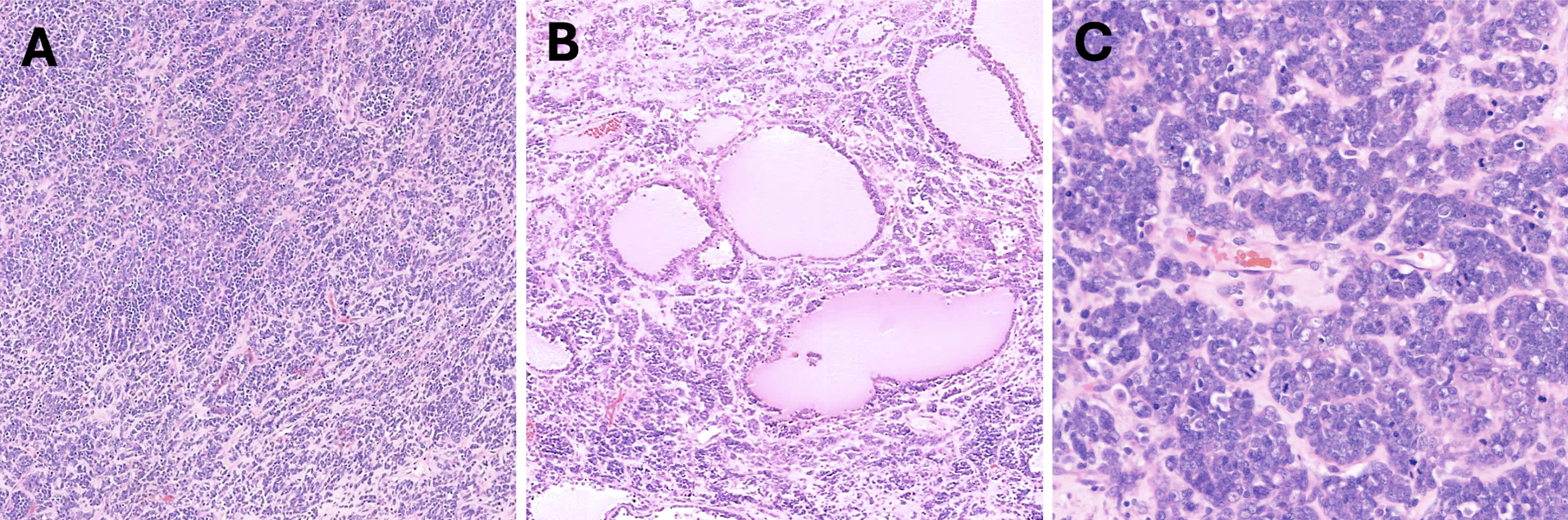
Small cell carcinoma of ovary, hypercalcemic type is a very aggressive neoplasm, first described by Dr Robert E. Scully.183 It typically affects young patients, predominantly in the second and third decades of life, presenting with hypercalcemia in approximately 60% and often with advanced stage. It is composed of small undifferentiated cells with scant cytoplasm and brisk mitotic activity that grow in sheets, nests, cords, clusters, or single cells with variable numbers of follicle-like spaces (Figure 14A–C). Some tumors may contain a component of large cells with moderate to abundant eosinophilic cytoplasm, variable rhabdoid morphology and prominent nucleoli that, when predominant, has been named large cell variant. Rarely, mucinous epithelium may be seen.184 The lineage of differentiation is still unclear; however, molecular alterations in SMARCA4 (BRG) and SMARCA2 (BRM), components of SWI/SNF complex, have been uncovered as driver events in these tumors.185,186,187 Patients with rhabdoid tumor predisposition syndrome type 2, caused by germline loss-of-function mutations in SMARCA4, are at increased risk of developing small cell carcinoma of ovary, hypercalcemic type.185,186 This tumor is associated with a very poor prognosis even in patients with tumor confined to the ovary at presentation.
14
Small cell carcinoma of ovary, hypercalcemic type. (A) Cells arranged in nests and sheets. (B) Follicle-like spaces. (C) Small, undifferentiated cells with scant cytoplasm and brisk mitotic activity.
STK11 adnexal tumor
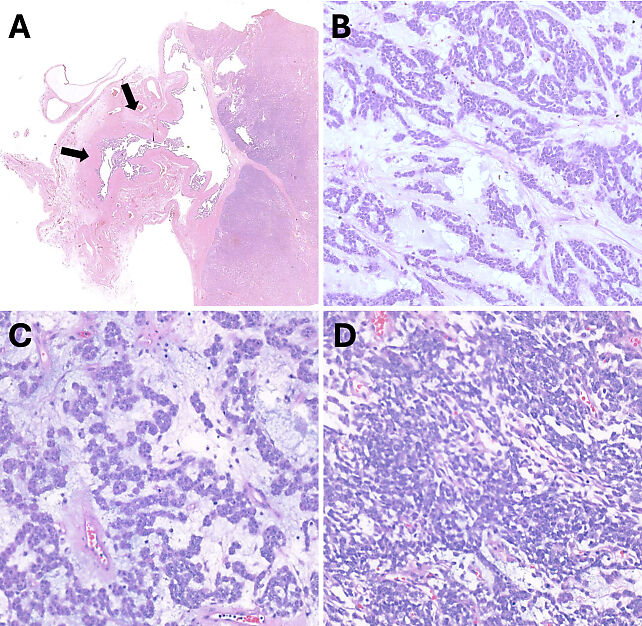
STK11 adnexal tumor has been recently described as a distinctive neoplasm characterized by STK11 alterations often centered in a paratubal location (Figure 15A) and seen in patients with Peutz–Jeghers syndrome in approximately 50% of cases..188 This tumor was misdiagnosed in the past as female adnexal tumor of probable wolffian origin (FATWO), endometrioid carcinoma, mesothelioma and sex-cord stromal tumor. It is characterized by interanastomosing cords and trabeculae of epithelioid and spindled cells in a myxoid to edematous stroma (Figure 15B–D). A variety of other patterns, such as tubular, cystic, cribriform, and microacinar can be seen. This tumor is associated with frequent recurrences and metastases.189
15
STK11 adnexal tumor. (A) Paratubal location (arrows indicating adjacent Fallopian tube). (B) Interanastomosing nests and trabeculae set in a myxoid background. (C) Microacini, small nests and cords resembling a salivary-type tumor. (D) Diffuse and spindled patterns.
Mesothelioma
Mesothelioma may rarely present as a predominant ovarian mass190 or as diffuse peritoneal involvement with nodules or masses of varying size and secondary adnexal involvement. Epithelioid morphology is the most prevalent and is characterized by a variety of architectural patterns, including tubular, papillary and solid, which can mimic Müllerian serous or clear cell neoplasms. Less commonly, it shows sarcomatoid or spindled cells and a biphasic appearance.191,192 These tumors are positive for calretinin, WT1 and D2–40, and may also express PAX8, a known Müllerian marker.193 The link between asbestos exposure and peritoneal mesothelioma is weaker than that observed for pleural mesothelioma.194 Common molecular alterations include BAP1 (inactivating mutations and deletion), CDKN2A (deletion) and NF2 (inactivating mutations and deletion).195,196 A subset of mesotheliomas arise in patients with BAP1 tumor predisposition syndrome.197
PRACTICE RECOMMENDATIONS
- High-grade serous carcinoma is typically aggressive, characterized by TP53 mutations and, in most cases, arises from the fimbriated end of the Fallopian tube.
- Fallopian tubes of patients with high-grade serous carcinoma should be examined microscopically following the SEE-FIM (sectioning and extensively examining the fimbriated end) protocol to detect serous tubal intraepithelial carcinoma (STIC) and assign primary site.
- High-grade serous carcinoma with solid, pseudo-endometrioid and transitional-like (SET) pattern is often seen in association with homologous recombination deficiency (HRD), which predicts sensitivity to poly(ADP-ribose) polymerase (PARP) inhibitors.
- Chemotherapy response score (CRS) should be assigned based on the amount of residual tumor involving the omentum in patients with advanced-stage high-grade serous carcinomas receiving neoadjuvant chemotherapy.
- Folate receptor alpha (FOLR1) immunohistochemistry has emerged as a companion predictive biomarker test to assess eligibility for the antibody drug conjugate mirvetuximab soravtansine.
- Low-grade serous carcinoma commonly arises from serous borderline tumors and harbors molecular alterations involving RAS and RAF pathways (KRAS, NRAS and BRAF) and lacking TP53
- Endometrioid carcinoma is often seen in association with endometriosis or adenofibroma and can exhibit a wide morphologic spectrum that may closely mimic other ovarian tumors, including sex-cord stromal tumors, carcinosarcoma or squamous cell carcinoma.
- Ovarian endometrioid carcinoma can co-occur with an endometrial endometrioid carcinoma and, based on pathologic criteria, is classified as low-risk (synchronous or independent primaries) or high-risk (advanced stage metastatic tumor).
- Clear cell carcinoma is also frequently associated with endometriosis and is considered by definition a high-grade malignancy. It may be associated with paraneoplastic syndromes.
- Endometrioid and clear cell carcinomas may exhibit mismatch repair protein deficiency and can be associated with Lynch syndrome.
- Undifferentiated and dedifferentiated carcinoma frequently show abnormal expression of SWI/SNF (SWItch/Sucrose Non-Fermentable) complex components (ARID1A/B, SMARCA2/BRM, SMARCA4/BRG and SMARCB1/INI1) and may also be a manifestation of Lynch syndrome.
- Comprehensive sampling guided by careful gross examination and clinical findings is key to the evaluation of ovarian tumors, in particular, mucinous neoplasms due to their remarkable intratumoral heterogeneity and frequent differential diagnosis with metastases.
- Ovarian involvement may be the first manifestation of an extra-ovarian mucinous carcinoma, especially in pancreatobiliary tumors, in which the primary may be very small and difficult to identify.
- The pattern of invasion of primary ovarian mucinous carcinoma is a better predictor of behavior than the traditional grading classifications with infiltrative/destructive growth being associated with worse prognosis when compared to expansile.
- Mesonephric-like carcinoma is a newly reported subtype of carcinoma associated with aggressive behavior and tendency to metastasize to the lungs, and is often misdiagnosed as low-grade endometrioid adenocarcinoma.
- Adult type granulosa cell tumor is associated with elevated serum inhibin and can present with estrogenic manifestations with increased risk of developing endometrial hyperplasia and carcinoma. Most adult-type granulosa cell tumors reveal FOXL2.
- Juvenile granulosa cell tumor lacks FOXL2. Patients with Ollier disease and Maffucci syndrome are at increased risk of developing this tumor.
- Sertoli-Leydig cell tumors are typically associated with androgenic manifestations and classified based on the appearance of the Sertoli cell component. Well-differentiated tumors are considered benign and lack DICER1 mutations. Moderately and poorly differentiated tumors can show malignant behavior and may be associated with DICER1 tumor predisposing syndrome. Rhabdomyosarcomatous differentiation may be responsible for more aggressive behavior.
- Patients with Peutz–Jeghers syndrome can present with a variety of uncommon gynecologic tract neoplasms, including sex cord tumor with annular tubules (SCTAT), STK11 adnexal tumor, Sertoli cell tumor, and gastric-type proliferations (endocervical adenocarcinoma, lobular endocervical hyperplasia, ovarian neoplasms, multifocal lesions).
- Most malignant germ cell tumors are associated with isochromosome 12p or 12p amplifications, except for pure immature teratomas.
- Serum markers can be helpful in the differential diagnosis of germ cell tumors: lactose dehydrogenase (dysgerminoma), alpha-fetoprotein (yolk sac tumor) and human chorionic gonadotropin (choriocarcinoma).
- Germ cell component (most common yolk sac) associated with Müllerian carcinomas is considered of somatic derivation not of germ cell origin.
- Immature teratoma is diagnosed and graded based on the presence and amount of immature neuroepithelium. Grading and stage predict outcomes in these tumors, in contrast to other malignant germ cell tumor, which are not graded and stage is the most important prognostic factor.
- Small cell carcinoma of ovary, hypercalcemic type is a highly aggressive malignancy that typically affects young patients (second and third decades of life) and is characterized by SMARCA4 (BRG) and SMARCA2 (BRM) mutations. Patients with rhabdoid tumor predisposition syndrome type 2 (germline loss-of-function germline mutations in SMARCA4) are at increased risk of developing this tumor.
- It is important to recognize the association between distinctive adnexal neoplasms (benign, borderline or malignant) and specific tumor-predisposition genetic syndromes, including hereditary breast and ovarian cancer syndrome, Lynch syndrome, Peutz–Jeghers syndrome and DICER1 syndrome.
CONFLICTS OF INTEREST
The author(s) of this chapter declare that they have no interests that conflict with the contents of the chapter.
Feedback
Publishers’ note: We are constantly trying to update and enhance chapters in this Series. So if you have any constructive comments about this chapter please provide them to us by selecting the "Your Feedback" link in the left-hand column.
REFERENCES
Renz M, Friedlander M, Berek JS. Cancer of the ovary, fallopian tube, and peritoneum: 2025 update. Int J Gynaecol Obstet. 2025 Sep;171 Suppl 1(Suppl 1):6–35. doi: 10.1002/ijgo.70282 PubMed PMID: 40908761. | |
WHO Classification of Tumours Editorial Board. Female genital tumours. 5th ed. Lyon (France): International Agency for Research on Cancer; 2020. | |
Webb PM, Jordan SJ. Global epidemiology of epithelial ovarian cancer. Nat Rev Clin Oncol. 2024 May;21(5):389–400. doi: 10.1038/s41571-024-00881-3 PubMed PMID: 38548868. | |
Ahmed AA, Etemadmoghadam D, Temple J, Lynch AG, Riad M, Sharma R, et al. Driver mutations in TP53 are ubiquitous in high grade serous carcinoma of the ovary. J Pathol. 2010 May;221(1):49–56. doi: 10.1002/path.2696 PubMed PMID: 20229506. | |
Köbel M, Piskorz AM, Lee S, Lui S, LePage C, Marass F, et al. Optimized p53 immunohistochemistry is an accurate predictor of TP53 mutation in ovarian carcinoma. J Pathol Clin Res. 2016 Oct;2(4):247–258. doi: 10.1002/cjp2.53 PubMed PMID: 27840695. | |
Köbel M, Luo L, Grevers X, Lee S, Brooks-Wilson A, Gilks CB, et al. Ovarian Carcinoma Histotype: Strengths and Limitations of Integrating Morphology With Immunohistochemical Predictions. Int J Gynecol Pathol. 2019 Jul;38(4):353–362. doi: 10.1097/PGP.0000000000000530 PubMed PMID: 29901523. | |
Bartosch C, Clarke B, Bosse T. Gynaecological neoplasms in common familial syndromes (Lynch and HBOC). Pathology. 2018 Feb;50(2):222–237. doi: 10.1016/j.pathol.2017.10.010 PubMed PMID: 29287922. | |
Ritterhouse LL, Nowak JA, Strickland KC, Garcia EP, Jia Y, Lindeman NI, et al. Morphologic correlates of molecular alterations in extrauterine Müllerian carcinomas. Mod Pathol. 2016 Aug;29(8):893–903. doi: 10.1038/modpathol.2016.82 PubMed PMID: 27150160. | |
Soslow RA, Han G, Park KJ, Garg K, Olvera N, Spriggs DR, et al. Morphologic patterns associated with BRCA1 and BRCA2 genotype in ovarian carcinoma. Mod Pathol. 2012 Apr;25(4):625–636. doi: 10.1038/modpathol.2011.183 PubMed PMID: 22193042. | |
Kindelberger DW, Lee Y, Miron A, Hirsch MS, Feltmate C, Medeiros F, et al. Intraepithelial carcinoma of the fimbria and pelvic serous carcinoma: Evidence for a causal relationship. Am J Surg Pathol. 2007 Feb;31(2):161–169. doi: 10.1097/01.pas.0000213335.40358.47 PubMed PMID: 17255760. | |
Lee Y, Miron A, Drapkin R, Nucci MR, Medeiros F, Saleemuddin A, et al. A candidate precursor to serous carcinoma that originates in the distal fallopian tube. J Pathol. 2007 Jan;211(1):26–35. doi: 10.1002/path.2091 PubMed PMID: 17117391. | |
Singh N, Benson JL, Gan C, Anglesio M, Arora R, Faruqi AZ, et al. Disease Distribution in Low-stage Tubo-ovarian High-grade Serous Carcinoma (HGSC): Implications for Assigning Primary Site and FIGO Stage. Int J Gynecol Pathol. 2018 Jul;37(4):324–330. doi: 10.1097/PGP.0000000000000429 PubMed PMID: 28787323. | |
Lee Y, Medeiros F, Kindelberger D, Callahan MJ, Muto MG, Crum CP. Advances in the recognition of tubal intraepithelial carcinoma: applications to cancer screening and the pathogenesis of ovarian cancer. Adv Anat Pathol. 2006 Jan;13(1):1–7. doi: 10.1097/01.pap.0000201826.46978.e5 PubMed PMID: 16462151. | |
Böhm S, Faruqi A, Said I, Lockley M, Brockbank E, Jeyarajah A, et al. Chemotherapy Response Score: Development and Validation of a System to Quantify Histopathologic Response to Neoadjuvant Chemotherapy in Tubo-Ovarian High-Grade Serous Carcinoma. J Clin Oncol. 2015 Aug 1;33(22):2457–2463. doi: 10.1200/JCO.2014.60.5212 PubMed PMID: 26124480. | |
Matulonis UA, Lorusso D, Oaknin A, Pignata S, Dean A, Denys H, et al. Efficacy and Safety of Mirvetuximab Soravtansine in Patients With Platinum-Resistant Ovarian Cancer With High Folate Receptor Alpha Expression: Results From the SORAYA Study. J Clin Oncol. 2023 May 1;41(13):2436–2445. doi: 10.1200/JCO.22.01900 PubMed PMID: 36716407. | |
Eichhorn JH, Bell DA, Young RH, Scully RE. Ovarian serous borderline tumors with micropapillary and cribriform patterns: a study of 40 cases and comparison with 44 cases without these patterns. Am J Surg Pathol. 1999 Apr;23(4):397–409. doi: 10.1097/00000478-199904000-00004 PubMed PMID: 10199469. | |
Deavers MT, Gershenson DM, Tortolero-Luna G, Malpica A, Lu KH, Silva EG. Micropapillary and cribriform patterns in ovarian serous tumors of low malignant potential: a study of 99 advanced stage cases. Am J Surg Pathol. 2002 Sep;26(9):1129–1141. doi: 10.1097/00000478-200209000-00003 PubMed PMID: 12218569. | |
Ahn G, Folkins AK, McKenney JK, Longacre TA. Low-grade Serous Carcinoma of the Ovary: Clinicopathologic Analysis of 52 Invasive Cases and Identification of a Possible Noninvasive Intermediate Lesion. Am J Surg Pathol. 2016 Sep;40(9):1165–1176. doi: 10.1097/PAS.0000000000000693 PubMed PMID: 27487741. | |
Hunter SM, Anglesio MS, Ryland GL, Sharma R, Chiew YE, Rowley SM, et al. Molecular profiling of low grade serous ovarian tumours identifies novel candidate driver genes. Oncotarget. 2015 Nov 10;6(35):37663–37677. doi: 10.18632/oncotarget.5438 PubMed PMID: 26506417. | |
Gershenson DM, Sun CC, Lu KH, Coleman RL, Sood AK, Malpica A, et al. Clinical behavior of stage II-IV low-grade serous carcinoma of the ovary. Obstet Gynecol. 2006 Aug;108(2):361–368. doi: 10.1097/01.AOG.0000227787.24587.d1 PubMed PMID: 16880307. | |
Chui MH, Kang EY, Kahn RM, Chiang S, Zhou Q, Iasonos A, et al. Clinicopathologic Features, Molecular Landscape, and Prognostic Implications of Ovarian Low-grade Serous Tumors with Histologic Transformation. Clin Cancer Res. 2025 Jul 15;31(14):3084–3095. doi: 10.1158/1078-0432.CCR-24-3168 PubMed PMID: 40327333. | |
Young RH, Prat J, Scully RE. Ovarian endometrioid carcinomas resembling sex cord-stromal tumors. A clinicopathological analysis of 13 cases. Am J Surg Pathol. 1982 Sep;6(6):513–522. doi: 10.1097/00000478-198209000-00003 PubMed PMID: 6890771. | |
Tornos C, Silva EG, Ordonez NG, Gershenson DM, Young RH, Scully RE. Endometrioid carcinoma of the ovary with a prominent spindle-cell component, a source of diagnostic confusion. A report of 14 cases. Am J Surg Pathol. 1995 Dec;19(12):1343–1353. doi: 10.1097/00000478-199512000-00001 PubMed PMID: 7503356. | |
Murray SK, Clement PB, Young RH. Endometrioid carcinomas of the uterine corpus with sex cord-like formations, hyalinization, and other unusual morphologic features: a report of 31 cases of a neoplasm that may be confused with carcinosarcoma and other uterine neoplasms. Am J Surg Pathol. 2005 Feb;29(2):157–166. doi: 10.1097/01.pas.0000149704.89463.05 PubMed PMID: 15644772. | |
Weisman P, Park KJ, Xu J. FIGO Grade 3 Endometrioid Adenocarcinomas With Diffusely Aberrant β-Catenin Expression: An Aggressive Subset Resembling Cutaneous Pilomatrix Carcinomas. International Journal of Gynecological Pathology. 2022 Mar 1;41(2):126–131. doi: 10.1097/PGP.0000000000000775 PubMed PMID: 33811207. | |
Xu J, Park KJ, Weisman PS. An Expanded Series of Pilomatrix-like High-grade Endometrioid Carcinoma (PiMHEC), Including Both MMR Deficient and MMR Proficient Cases. International Journal of Gynecological Pathology. Lippincott Williams and Wilkins; 2024. p. 67–69. doi: 10.1097/PGP.0000000000000955 PubMed PMID: 37192144. | |
Safdar NS, Thompson EF, Gilks CB, Isacson C, Bennett JA, Clarke B, et al. Corded and Hyalinized and Spindled Endometrioid Endometrial Carcinoma: A Clinicopathologic and Molecular Analysis of 9 Tumors Based on the TCGA Classifier. Am J Surg Pathol. 2021 Aug 1;45(8):1038–1046. doi: 10.1097/PAS.0000000000001737 PubMed PMID: 34115671. | |
Lengyel K, Musick A, Fisch AS, Lin LH, Turashvili G, Young RH, et al. Adnexal Endometrioid Carcinomas With Sex Cord-Like Morphology are Frequently PAX8-Negative, SOX17-Positive, and Enriched for CTNNB1 Alterations. Am J Surg Pathol. 2026 Mar 11. doi: 10.1097/PAS.0000000000002537 PubMed PMID: 41808247. | |
Rambau PF, McIntyre JB, Taylor J, Lee S, Ogilvie T, Sienko A, et al. Morphologic Reproducibility, Genotyping, and Immunohistochemical Profiling Do Not Support a Category of Seromucinous Carcinoma of the Ovary. Am J Surg Pathol. 2017 May;41(5):685–695. doi: 10.1097/PAS.0000000000000812 PubMed PMID: 28125452. | |
Matsuo K, Machida H, Frimer M, Marcus JZ, Pejovic T, Roman D, et al. Prognosis of women with stage I endometrioid endometrial cancer and synchronous stage I endometrioid ovarian cancer. Gynecol Oncol. 2017;147(3):558–564. doi: 10.1016/j.ygyno.2017.09.027.Prognosis. | |
Matsuo K, Machida H, Blake EA, Holman LL, Rimel BJ, Roman LD, et al. Trends and outcomes of women with synchronous endometrial and ovarian cancer. Oncotarget. 2018;9(47):28757–28771. doi: 10.18632/oncotarget.25550. | |
Gilks CB, Kommoss F. Synchronous tumours of the female reproductive tract. Pathology. 2018 Feb;50(2):214–221. doi: 10.1016/j.pathol.2017.10.007 PubMed PMID: 29249564. | |
Anglesio MS, Wang YK, Maassen M, Horlings HM, Bashashati A, Senz J, et al. Synchronous Endometrial and Ovarian Carcinomas: Evidence of Clonality. J Natl Cancer Inst. 2016;108(6):1–5. doi: 10.1093/jnci/djv428 PubMed PMID: 26832771. | |
Schultheis AM, Ng CKY, De Filippo MR, Piscuoglio S, Macedo GS, Gatius S, et al. Massively parallel sequencing-based clonality analysis of synchronous endometrioid endometrial and ovarian carcinomas. J Natl Cancer Inst. 2016;108(6):2–7. doi: 10.1093/jnci/djv427 PubMed PMID: 26832770. | |
Moukarzel LA, Da Cruz Paula A, Ferrando L, Hoang T, Sebastiao APM, Pareja F, et al. Clonal relationship and directionality of progression of synchronous endometrial and ovarian carcinomas in patients with DNA mismatch repair-deficiency associated syndromes. Modern Pathology. 2021;34(5):994–1007. doi: 10.1038/s41379-020-00721-6 PubMed PMID: 33328602. | |
Cybulska P, Paula ADC, Tseng J, Leitao MM, Bashashati A, Huntsman DG, et al. Molecular profiling and molecular classification of endometrioid ovarian carcinomas. Gynecol Oncol. 2019 Sep 1;154(3):516–523. doi: 10.1016/j.ygyno.2019.07.012 PubMed PMID: 31340883. | |
Bennett JA, Pesci A, Morales-Oyarvide V, Da Silva A, Nardi V, Oliva E. Incidence of Mismatch Repair Protein Deficiency and Associated Clinicopathologic Features in a Cohort of 104 Ovarian Endometrioid Carcinomas. Am J Surg Pathol. 2019 Feb;43(2):235–243. doi: 10.1097/PAS.0000000000001165 PubMed PMID: 30256257. | |
Rambau PF, Duggan MA, Ghatage P, Warfa K, Steed H, Perrier R, et al. Significant frequency of MSH2/MSH6 abnormality in ovarian endometrioid carcinoma supports histotype-specific Lynch syndrome screening in ovarian carcinomas. Histopathology. 2016 Aug;69(2):288–297. doi: 10.1111/his.12934 PubMed PMID: 26799366. | |
Delair D, Oliva E, Köbel M, MacIas A, Gilks CB, Soslow RA. Morphologic spectrum of immunohistochemically characterized clear cell carcinoma of the ovary: A study of 155 cases. American Journal of Surgical Pathology. 2011;35(1):36–44. doi: 10.1097/PAS.0b013e3181ff400e PubMed PMID: 21164285. | |
Fadare O, Zhao C, Khabele D, Parkash V, Quick CM, Gwin K, et al. Comparative analysis of Napsin A, alpha-methylacyl-coenzyme A racemase (AMACR, P504S), and hepatocyte nuclear factor 1 beta as diagnostic markers of ovarian clear cell carcinoma: an immunohistochemical study of 279 ovarian tumours. Pathology. 2015 Feb;47(2):105–111. doi: 10.1097/PAT.0000000000000223 PubMed PMID: 25551297. | |
Parra-Herran C, Bassiouny D, Lerner-Ellis J, Olkhov-Mitsel E, Ismiil N, Hogen L, et al. p53, Mismatch Repair Protein, and POLE Abnormalities in Ovarian Clear Cell Carcinoma: An Outcome-based Clinicopathologic Analysis. Am J Surg Pathol. 2019 Dec;43(12):1591–1599. doi: 10.1097/PAS.0000000000001328 PubMed PMID: 31335355. | |
Wilkins R, Lin LH, Xia R, Shiomi T, Zamuco RDL, Shukla PS. Clinical Outcome and Morphology-Based Analysis of p53 Aberrant and Mismatch Repair Protein-Deficient Ovarian Clear Cell Carcinoma and Their Association With p16, HER2, and PD-L1 Expression. Am J Clin Pathol. 2023 Nov 1;160(5):466–476. doi: 10.1093/ajcp/aqad073 PubMed PMID: 37415414. | |
Bennett JA, Dong F, Young RH, Oliva E. Clear cell carcinoma of the ovary: Evaluation of prognostic parameters based on a clinicopathological analysis of 100 cases. Histopathology. 2015;66(6):808–815. doi: 10.1111/his.12514 PubMed PMID: 25065903. | |
Goff BA, Sainz de la Cuesta R, Muntz HG, Fleischhacker D, Ek M, Rice LW, et al. Clear cell carcinoma of the ovary: a distinct histologic type with poor prognosis and resistance to platinum-based chemotherapy in stage III disease. Gynecol Oncol. 1996 Mar;60(3):412–417. doi: 10.1006/gyno.1996.0065 PubMed PMID: 8774649. | |
Kennedy AW, Markman M, Biscotti C V, Emery JD, Rybicki LA. Survival probability in ovarian clear cell adenocarcinoma. Gynecol Oncol. 1999 Jul;74(1):108–114. doi: 10.1006/gyno.1999.5445 PubMed PMID: 10385560. | |
Sugiyama T, Kamura T, Kigawa J, Terakawa N, Kikuchi Y, Kita T, et al. Clinical characteristics of clear cell carcinoma of the ovary: a distinct histologic type with poor prognosis and resistance to platinum-based chemotherapy. Cancer. 2000 Jun 1;88(11):2584–2589. PubMed PMID: 10861437. | |
Lin LH, Irshaid L, Matulonis UA, Kolin DL. Validation of Tumor Budding as a Prognostic Factor in Ovarian Clear Cell Carcinoma Using an Independent Cohort. Int J Gynecol Pathol. 2025 Nov 1;44(6):519–525. doi: 10.1097/PGP.0000000000001099 PubMed PMID: 39869066. | |
Irshaid L, Costigan DC, Dong F, Matulonis UA, Nucci MR, Kolin DL. Molecular Landscape of Mullerian Clear Cell Carcinomas Identifies The Cancer Genome Atlas-like Prognostic Subgroups. Mod Pathol. 2023 May;36(5):100123. doi: 10.1016/j.modpat.2023.100123 PubMed PMID: 36857998. | |
Didar H, Farzaneh F, Najafiarab H, Namakin K, Gohari K, Sheidaei A, et al. Clear cell carcinoma of the ovary and venous thromboembolism: a systematic review and meta-analysis. Curr Med Res Opin. 2023 Jun;39(6):901–910. doi: 10.1080/03007995.2023.2208488 PubMed PMID: 37104696. | |
Nussbaum SR, Gaz RD, Arnold A. Hypercalcemia and ectopic secretion of parathyroid hormone by an ovarian carcinoma with rearrangement of the gene for parathyroid hormone. N Engl J Med. 1990 Nov 8;323(19):1324–1328. doi: 10.1056/NEJM199011083231907 PubMed PMID: 2215618. | |
Goldstein BH, Birk CL, Van Houten M, Veve R, Brown J V, Rettenmaier MA, et al. Ovarian cancer and late onset paraneoplastic cerebellar degeneration. Arch Gynecol Obstet. 2009 Jul;280(1):99–101. doi: 10.1007/s00404-008-0822-1 PubMed PMID: 18987868. | |
Donovan JT, Prefontaine M, Gragoudas ES. Blindness as a consequence of a paraneoplastic syndrome in a woman with clear cell carcinoma of the ovary. Gynecol Oncol. 1999 Jun;73(3):424–429. doi: 10.1006/gyno.1998.5332 PubMed PMID: 10366472. | |
McCluggage WG. Endometriosis-related pathology: a discussion of selected uncommon benign, premalignant and malignant lesions. Histopathology. 2020 Jan;76(1):76–92. doi: 10.1111/his.13970 PubMed PMID: 31846535. | |
Brescia RJ, Dubin N, Demopoulos RI. Endometrioid and clear cell carcinoma of the ovary. Factors affecting survival. Int J Gynecol Pathol. 1989;8(2):132–138. doi: 10.1097/00004347-198906000-00006 PubMed PMID: 2714931. | |
Mackenzie R, Talhouk A, Eshragh S, Lau S, Cheung D, Chow C, et al. Morphologic and Molecular Characteristics of Mixed Epithelial Ovarian Cancers. Am J Surg Pathol. 2015 Nov;39(11):1548–1557. doi: 10.1097/PAS.0000000000000476 PubMed PMID: 26099008. | |
Cancer Genome Atlas Research Network, Kandoth C, Schultz N, Cherniack AD, Akbani R, Liu Y, et al. Integrated genomic characterization of endometrial carcinoma. Nature. 2013 May 2;497(7447):67–73. doi: 10.1038/nature12113 PubMed PMID: 23636398. | |
Parra-Herran C, Lerner-Ellis J, Xu B, Khalouei S, Bassiouny D, Cesari M, et al. Molecular-based classification algorithm for endometrial carcinoma categorizes ovarian endometrioid carcinoma into prognostically significant groups. Modern Pathology. 2017 Dec 1;30(12):1748–1759. doi: 10.1038/modpathol.2017.81 PubMed PMID: 28776572. | |
Hollis RL, Thomson JP, Stanley B, Churchman M, Meynert AM, Rye T, et al. Molecular stratification of endometrioid ovarian carcinoma predicts clinical outcome. Nat Commun. 2020 Dec 1;11(1). doi: 10.1038/s41467-020-18819-5 PubMed PMID: 33020491. | |
Silva EG, Deavers MT, Bodurka DC, Malpica A. Association of low-grade endometrioid carcinoma of the uterus and ovary with undifferentiated carcinoma: a new type of dedifferentiated carcinoma? Int J Gynecol Pathol. 2006 Jan;25(1):52–58. doi: 10.1097/01.pgp.0000183048.22588.18 PubMed PMID: 16306785. | |
Tafe LJ, Garg K, Chew I, Tornos C, Soslow RA. Endometrial and ovarian carcinomas with undifferentiated components: Clinically aggressive and frequently underrecognized neoplasms. Modern Pathology. 2010 Jun;23(6):781–789. doi: 10.1038/modpathol.2010.41 PubMed PMID: 20305618. | |
Tessier-Cloutier B, Kommoss FKF, Kolin DL, Němejcová K, Smith DP, Pors J, et al. Dedifferentiated and Undifferentiated Ovarian Carcinoma: An Aggressive and Molecularly Distinct Ovarian Tumor Characterized by Frequent SWI/SNF Complex Inactivation. Modern Pathology. 2024 Jan 1;37(1). doi: 10.1016/j.modpat.2023.100374 PubMed PMID: 37925057. | |
Köbel M, Parra-Herran C, Gorringe K. Diagnosis and Risk Stratification of Ovarian Mucinous Neoplasms: Pattern of Invasion, Immunohistochemistry, and Molecular Diagnostics. Adv Anat Pathol. 2025 Jan 1;32(1):85–97. doi: 10.1097/PAP.0000000000000473 PubMed PMID: 39523705. | |
Momeni-Boroujeni A, Song H, Irshaid L, Strickland S, Parra-Herran C, Busca A. Outcome-based Validation of Confluent/Expansile Versus Infiltrative Pattern Assessment and Growth-based Grading in Ovarian Mucinous Carcinoma. Am J Surg Pathol. 2022 Sep 1;46(9):1250–1259. doi: 10.1097/PAS.0000000000001895 PubMed PMID: 35363158. | |
Kim KR, Lee HI, Lee SK, Ro JY, Robboy SJ. Is stromal microinvasion in primary mucinous ovarian tumors with “mucin granuloma” true invasion? Am J Surg Pathol. 2007 Apr;31(4):546–554. doi: 10.1097/01.pas.0000213430.68998.2c PubMed PMID: 17414101. | |
Bagué S, Rodríguez IM, Prat J. Sarcoma-like mural nodules in mucinous cystic tumors of the ovary revisited: a clinicopathologic analysis of 10 additional cases. Am J Surg Pathol. 2002 Nov;26(11):1467–1476. doi: 10.1097/00000478-200211000-00009 PubMed PMID: 12409723. | |
Provenza C, Young RH, Prat J. Anaplastic carcinoma in mucinous ovarian tumors: a clinicopathologic study of 34 cases emphasizing the crucial impact of stage on prognosis, their histologic spectrum, and overlap with sarcomalike mural nodules. Am J Surg Pathol. 2008 Mar;32(3):383–389. doi: 10.1097/PAS.0b013e3181451b93 PubMed PMID: 18300813. | |
Prat J, Young RH, Scully RE. Ovarian mucinous tumors with foci of anaplastic carcinoma. Cancer. 1982 Jul 15;50(2):300–304. doi: 10.1002/1097-0142(19820715)50:2<300::aid-cncr2820500222>3.0.co;2-e PubMed PMID: 7083135. | |
Prat J, Scully RE. Sarcomas in ovarian mucinous tumors: a report of two cases. Cancer. 1979 Oct;44(4):1327–1331. doi: 10.1002/1097-0142(197910)44:4<1327::aid-cncr2820440425>3.0.co;2-p PubMed PMID: 498013. | |
Prat J, Scully RE. Ovarian mucinous tumors with sarcoma-like mural nodules: a report of seven cases. Cancer. 1979 Oct;44(4):1332–1344. doi: 10.1002/1097-0142(197910)44:4<1332::aid-cncr2820440426>3.0.co;2-# PubMed PMID: 498014. | |
Chapel DB, Lee EK, Da Silva AFL, Teschan N, Feltmate C, Matulonis UA, et al. Mural nodules in mucinous ovarian tumors represent a morphologic spectrum of clonal neoplasms: a morphologic, immunohistochemical, and molecular analysis of 13 cases. Mod Pathol. 2021 Mar;34(3):613–626. doi: 10.1038/s41379-020-0642-9 PubMed PMID: 32759977. | |
Cheasley D, Wakefield MJ, Ryland GL, Allan PE, Alsop K, Amarasinghe KC, et al. The molecular origin and taxonomy of mucinous ovarian carcinoma. Nat Commun. 2019 Sep 2;10(1):3935. doi: 10.1038/s41467-019-11862-x PubMed PMID: 31477716. | |
Chaudet K, Kem M, Lerwill M, Young RH, Mino-Kenudson M, Agaimy A, et al. SWI/SNF protein and claudin-4 expression in anaplastic carcinomas arising in mucinous tumours of the ovary and retroperitoneum. Histopathology. 2020 Aug;77(2):231–239. doi: 10.1111/his.14110 PubMed PMID: 32268438. | |
Ronnett BM, Yemelyanova A V, Vang R, Gilks CB, Miller D, Gravitt PE, et al. Endocervical adenocarcinomas with ovarian metastases: analysis of 29 cases with emphasis on minimally invasive cervical tumors and the ability of the metastases to simulate primary ovarian neoplasms. Am J Surg Pathol. 2008 Dec;32(12):1835–1853. doi: 10.1097/PAS.0b013e3181758831 PubMed PMID: 18813124. | |
Meriden Z, Yemelyanova A V, Vang R, Ronnett BM. Ovarian metastases of pancreaticobiliary tract adenocarcinomas: analysis of 35 cases, with emphasis on the ability of metastases to simulate primary ovarian mucinous tumors. Am J Surg Pathol. 2011 Feb;35(2):276–288. doi: 10.1097/PAS.0b013e31820508d0 PubMed PMID: 21263249. | |
Khunamornpong S, Lerwill MF, Siriaunkgul S, Suprasert P, Pojchamarnwiputh S, Chiangmai WN, et al. Carcinoma of extrahepatic bile ducts and gallbladder metastatic to the ovary: a report of 16 cases. Int J Gynecol Pathol. 2008 Jul;27(3):366–379. doi: 10.1097/PGP.0b013e31815d6903 PubMed PMID: 18580314. | |
Khunamornpong S, Siriaunkgul S, Suprasert P, Pojchamarnwiputh S, Na Chiangmai W, Young RH. Intrahepatic cholangiocarcinoma metastatic to the ovary: a report of 16 cases of an underemphasized form of secondary tumor in the ovary that may mimic primary neoplasia. Am J Surg Pathol. 2007 Dec;31(12):1788–1799. doi: 10.1097/PAS.0b013e3180674ded PubMed PMID: 18043033. | |
Park CK, Kim HS. Clinicopathological Characteristics of Ovarian Metastasis from Colorectal and Pancreatobiliary Carcinomas Mimicking Primary Ovarian Mucinous Tumor. Anticancer Res. 2018 Sep;38(9):5465–5473. doi: 10.21873/anticanres.12879 PubMed PMID: 30194204. | |
Yemelyanova A V, Vang R, Judson K, Wu LSF, Ronnett BM. Distinction of primary and metastatic mucinous tumors involving the ovary: analysis of size and laterality data by primary site with reevaluation of an algorithm for tumor classification. Am J Surg Pathol. 2008 Jan;32(1):128–138. doi: 10.1097/PAS.0b013e3180690d2 d PubMed PMID: 18162780. | |
Tucker CM, Godcharles CL, Jiang W, Yeo CJ, Rosenblum NG, Halpern EJ, et al. Isolated Ovarian Metastasis from Pancreatic Cancer Mimicking Primary Ovarian Neoplasia: Role of Molecular Analysis in Determining Diagnosis. J Pancreat Cancer. 2021;7(1):74–79. doi: 10.1089/pancan.2021.0001 PubMed PMID: 34901699. | |
Stewart CJR, Ardakani NM, Doherty DA, Young RH. An evaluation of the morphologic features of low-grade mucinous neoplasms of the appendix metastatic in the ovary, and comparison with primary ovarian mucinous tumors. Int J Gynecol Pathol. 2014 Jan;33(1):1–10. doi: 10.1097/PGP.0b013e318284e070 PubMed PMID: 24300528. | |
Simons M, Simmer F, Bulten J, Ligtenberg MJ, Hollema H, van Vliet S, et al. Two types of primary mucinous ovarian tumors can be distinguished based on their origin. Mod Pathol. 2020 Apr;33(4):722–733. doi: 10.1038/s41379-019-0401-y PubMed PMID: 31695154. | |
Meagher NS, Wang L, Rambau PF, Intermaggio MP, Huntsman DG, Wilkens LR, et al. A combination of the immunohistochemical markers CK7 and SATB2 is highly sensitive and specific for distinguishing primary ovarian mucinous tumors from colorectal and appendiceal metastases. Mod Pathol. 2019 Dec;32(12):1834–1846. doi: 10.1038/s41379-019-0302-0 PubMed PMID: 31239549. | |
Strickland S, Wasserman JK, Giassi A, Djordjevic B, Parra-Herran C. Immunohistochemistry in the Diagnosis of Mucinous Neoplasms Involving the Ovary: The Added Value of SATB2 and Biomarker Discovery Through Protein Expression Database Mining. Int J Gynecol Pathol. 2016 May;35(3):191–208. doi: 10.1097/PGP.0000000000000238 PubMed PMID: 26535987. | |
Kwon DH, Malpica A, Zaleski M, Euscher ED, Ramalingam P. Immunohistochemical Loss of DPC4 in Tumors With Mucinous Differentiation Arising in or Involving the Gynecologic Tract. Int J Gynecol Pathol. 2021 Nov 1;40(6):523–532. doi: 10.1097/PGP.0000000000000754 PubMed PMID: 33405429. | |
Alghamdi S, Alghaashamy K, Pinto A. Expression of SMAD4 is Retained in Most Gynecologic Tumors with Mucinous Differentiation. Int J Gynecol Pathol. 2020 Sep;39(5):493–497. doi: 10.1097/PGP.0000000000000637 PubMed PMID: 31569186. | |
Euscher ED, Marques-Piubelli ML, Ramalingam P, Wistuba I, Lawson BC, Frumovitz M, et al. Extrauterine Mesonephric-like Carcinoma A Comprehensive Single Institution Study of 33 Cases. 2023. | |
Lin LH, Howitt BE, Kolin DL. From morphology to methylome: epigenetic studies of Müllerian mesonephric-like adenocarcinoma reveal similarities to cervical mesonephric adenocarcinoma. J Pathol. 2024 Jun;263(2):135–138. doi: 10.1002/path.6285 PubMed PMID: 38593211. | |
Deolet E, Arora I, Van Dorpe J, Van der Meulen J, Desai S, Van Roy N, et al. Extrauterine Mesonephric-like Neoplasms: Expanding the Morphologic Spectrum. Am J Surg Pathol. 2022 Jan 1;46(1):124–133. doi: 10.1097/PAS.0000000000001766 PubMed PMID: 34183523. | |
Pors J, Cheng A, Leo JM, Kinloch MA, Gilks B, Hoang L. A Comparison of GATA3, TTF1, CD10, and Calretinin in Identifying Mesonephric and Mesonephric-like Carcinomas of the Gynecologic Tract. Am J Surg Pathol. 2018 Dec;42(12):1596–1606. doi: 10.1097/PAS.0000000000001142 PubMed PMID: 30148742. | |
da Silva EM, Fix DJ, Sebastiao APM, Selenica P, Ferrando L, Kim SH, et al. Mesonephric and mesonephric-like carcinomas of the female genital tract: molecular characterization including cases with mixed histology and matched metastases. Modern Pathology. 2021 Aug 1;34(8):1570–1587. doi: 10.1038/s41379-021-00799-6 PubMed PMID: 33772212. | |
Lin DI, Shah N, Tse JY, Killian JK, Hemmerich A, Edgerly C, et al. Molecular profiling of mesonephric and mesonephric-like carcinomas of cervical, endometrial and ovarian origin. Gynecol Oncol Rep. 2020 Nov 1;34. doi: 10.1016/j.gore.2020.100652. | |
Fujii H, Yoshida M, Gong ZX, Matsumoto T, Hamano Y, Fukunaga M, et al. Frequent genetic heterogeneity in the clonal evolution of gynecological carcinosarcoma and its influence on phenotypic diversity. Cancer Res. 2000 Jan 1;60(1):114–120. PubMed PMID: 10646862. | |
Jin Z, Ogata S, Tamura G, Katayama Y, Fukase M, Yajima M, et al. Carcinosarcomas (malignant mullerian mixed tumors) of the uterus and ovary: a genetic study with special reference to histogenesis. Int J Gynecol Pathol. 2003 Oct;22(4):368–373. doi: 10.1097/01.pgp.0000092134.88121.56 PubMed PMID: 14501818. | |
Dhillon G, Llaurado-Fernandez M, Tessier-Cloutier B, Sy K, Bassiouny D, Han G, et al. Ovarian carcinosarcomas: p53 status defines two distinct patterns of oncogenesis and outcomes. Front Oncol. 2024;14:1408196. doi: 10.3389/fonc.2024.1408196 PubMed PMID: 39220645. | |
Ramphal K, Hadfield MJ, Bandera CM, Hart J, Dizon DS. Genomic and Molecular Characteristics of Ovarian Carcinosarcoma. Am J Clin Oncol. 2023 Dec 1;46(12):572–576. doi: 10.1097/COC.0000000000001056 PubMed PMID: 37986208. | |
Hammer PM, Kingsley LG, Sasse SA, Howitt BE. Clinicopathologic and Molecular Features of Tubo-Ovarian Carcinosarcomas With an Emphasis on p53 Wild-Type, KRAS-Mutated Tumors. Mod Pathol. 2026 Feb 2;39(4):100971. doi: 10.1016/j.modpat.2026.100971 PubMed PMID: 41638575. | |
Boggess JF, Soules MR, Goff BA, Greer BE, Cain JM, Tamimi HK. Serum inhibin and disease status in women with ovarian granulosa cell tumors. Gynecol Oncol. 1997 Jan;64(1):64–69. doi: 10.1006/gyno.1996.4520 PubMed PMID: 8995549. | |
Brink GJ, Groeneweg JW, Sickinghe AA, Lok CAR, Nijman HW, Piek JMJ, et al. Granulosa cell tumor patients presenting with acute abdomen: a case series. Gynecol Oncol Rep. 2025 Aug;60:101781. doi: 10.1016/j.gore.2025.101781 PubMed PMID: 40612387. | |
Stall JN, Young RH. Granulosa Cell Tumors of the Ovary With Prominent Thecoma-like Foci: A Report of 16 Cases Emphasizing the Ongoing Utility of the Reticulin Stain in the Modern Era. Int J Gynecol Pathol. 2019 Mar;38(2):143–150. doi: 10.1097/PGP.0000000000000508 PubMed PMID: 29708950. | |
Buza N, Wong S, Hui P. FOXL2 Mutation Analysis of Ovarian Sex Cord-Stromal Tumors: Genotype-Phenotype Correlation With Diagnostic Considerations. Int J Gynecol Pathol. 2018 Jul;37(4):305–315. doi: 10.1097/PGP.0000000000000426 PubMed PMID: 28700438. | |
Shah SP, Köbel M, Senz J, Morin RD, Clarke BA, Wiegand KC, et al. Mutation of FOXL2 in granulosa-cell tumors of the ovary. N Engl J Med. 2009 Jun 25;360(26):2719–2729. doi: 10.1056/NEJMoa0902542 PubMed PMID: 19516027. | |
Kolin DL, Mata DA, Lin DI, Ellenson LH, Momeni-Boroujeni A. FGFR1 Mutations Are Rare Alternate Oncogenic Drivers in FOXL2 -Wildtype Adult Granulosa Cell Tumors of the Ovary. Am J Surg Pathol. 2025 Dec 1;49(12):1245–1250. doi: 10.1097/PAS.0000000000002473 PubMed PMID: 41128462. | |
Ray LJ, Young RH, Sabbagh MF, Fisch AS, Oliva E, Devins KM. Adult Granulosa Cell Tumors of the Ovary With Tubular Differentiation: A Report of 80 Examples of an Underemphasized Feature With Clinicopathologic and Genomic Differences From Other Sex Cord-Stromal Tumors. Am J Surg Pathol. 2025 May 6;49(8):770–780. doi: 10.1097/PAS.0000000000002407 PubMed PMID: 40326456. | |
Pilsworth JA, Cochrane DR, Xia Z, Aubert G, Färkkilä AEM, Horlings HM, et al. TERT promoter mutation in adult granulosa cell tumor of the ovary. Mod Pathol. 2018 Jul;31(7):1107–1115. doi: 10.1038/s41379-018-0007-9 PubMed PMID: 29449679. | |
Da Cruz Paula A, da Silva EM, Segura SE, Pareja F, Bi R, Selenica P, et al. Genomic profiling of primary and recurrent adult granulosa cell tumors of the ovary. Mod Pathol. 2020 Aug;33(8):1606–1617. doi: 10.1038/s41379-020-0514-3 PubMed PMID: 32203090. | |
McConechy MK, Färkkilä A, Horlings HM, Talhouk A, Unkila-Kallio L, van Meurs HS, et al. Molecularly Defined Adult Granulosa Cell Tumor of the Ovary: The Clinical Phenotype. J Natl Cancer Inst. 2016 Nov;108(11). doi: 10.1093/jnci/djw134 PubMed PMID: 27297428. | |
Färkkilä A, McConechy MK, Yang W, Talhouk A, Ng Y, Lum A, et al. FOXL2 402C>G Mutation Can Be Identified in the Circulating Tumor DNA of Patients with Adult-Type Granulosa Cell Tumor. J Mol Diagn. 2017 Jan;19(1):126–136. doi: 10.1016/j.jmoldx.2016.08.005 PubMed PMID: 27810330. | |
Groeneweg JW, Roze JF, Peters EDJ, Sereno F, Brink AGJ, Paijens ST, et al. FOXL2 and TERT promoter mutation detection in circulating tumor DNA of adult granulosa cell tumors as biomarker for disease monitoring. Gynecol Oncol. 2021 Aug;162(2):413–420. doi: 10.1016/j.ygyno.2021.05.027 PubMed PMID: 34083028. | |
Fashedemi Y, Coutts M, Wise O, Bonhomme B, Baker G, Kelly PJ, et al. Adult Granulosa Cell Tumor With High-grade Transformation: Report of a Series With FOXL2 Mutation Analysis. Am J Surg Pathol. 2019 Sep;43(9):1229–1238. doi: 10.1097/PAS.0000000000001296 PubMed PMID: 31162286. | |
El Abiad JM, Robbins SM, Cohen B, Levin AS, Valle DL, Morris CD, et al. Natural history of Ollier disease and Maffucci syndrome: Patient survey and review of clinical literature. Am J Med Genet A. 2020 May;182(5):1093–1103. doi: 10.1002/ajmg.a.61530 PubMed PMID: 32144835. | |
Vougiouklakis T, Zhu K, Vasudevaraja V, Serrano J, Shen G, Linn RL, et al. Integrated analysis of ovarian juvenile granulosa cell tumors reveals distinct epigenetic signatures and recurrent TERT rearrangements. Clin Cancer Res. 2022 Apr;28(8):1724–1733. doi: 10.1158/1078-0432.CCR-21-3394 PubMed PMID: 35031544. | |
Boyraz B, Young RH, Oliva E, Devins KM, Watkins JC, Haridas R, et al. Anaplastic Juvenile Granulosa Cell Tumor: A Report of 10 Cases of an Unemphasized Variant With Adverse Prognostic Features Characterized by TP53 Inactivation With MYC Family Amplifications. Am J Surg Pathol. 2025 Oct 2. doi: 10.1097/PAS.0000000000002469 PubMed PMID: 41036825. | |
Young RH, Scully RE. Ovarian Sertoli-Leydig cell tumors. A clinicopathological analysis of 207 cases. Am J Surg Pathol. 1985 Aug;9(8):543–569. doi: 10.1097/00000478-198508000-00001 PubMed PMID: 3911780. | |
Al-Hussaini M, Al-Othman Y, Hijazi E, McCluggage WG. A Report of Ovarian Sertoli-Leydig Cell Tumors With Heterologous Intestinal-type Glands and Alpha Fetoprotein Elevation and Review of the Literature. Int J Gynecol Pathol. 2018 May;37(3):275–283. doi: 10.1097/PGP.0000000000000408 PubMed PMID: 28582340. | |
Schultz KAP, Williams GM, Kamihara J, Stewart DR, Harris AK, Bauer AJ, et al. DICER1 and Associated Conditions: Identification of At-risk Individuals and Recommended Surveillance Strategies. Clin Cancer Res. 2018 May 15;24(10):2251–2261. doi: 10.1158/1078-0432.CCR-17-3089 PubMed PMID: 29343557. | |
McCluggage WG, Foulkes WD. DICER1-associated sarcomas at different sites exhibit morphological overlap arguing for a unified nomenclature. Virchows Arch. 2021 Aug;479(2):431–433. doi: 10.1007/s00428-021-03087-5 PubMed PMID: 33825038. | |
Devins KM, Lin LH, Fisch AS, Dias-Santagata D, Pinto A, Young RH, et al. DICER1-Related Primitive Polyphenotypic Neoplasm: A Report of 15 Cases of an Underrecognized Tumor of the Gynecologic Tract and Peritoneum. Am J Surg Pathol. 2026 Mar 9. doi: 10.1097/PAS.0000000000002517 PubMed PMID: 41801179. | |
Young RH, Prat J, Scully RE. Ovarian Sertoli-Leydig cell tumors with heterologous elements. I. Gastrointestinal epithelium and carcinoid: a clinicopathologic analysis of thirty-six cases. Cancer. 1982 Dec 1;50(11):2448–2456. doi: 10.1002/1097-0142(19821201)50:11<2448::aid-cncr2820501133>3.0.co;2-t PubMed PMID: 7139537. | |
Prat J, Young RH, Scully RE. Ovarian Sertoli-Leydig cell tumors with heterologous elements. II. Cartilage and skeletal muscle: a clinicopathologic analysis of twelve cases. Cancer. 1982 Dec 1;50(11):2465–2475. doi: 10.1002/1097-0142(19821201)50:11<2465::aid-cncr2820501135>3.0.co;2-u PubMed PMID: 7139538. | |
Young RH, Scully RE. Ovarian Sertoli-Leydig cell tumors with a retiform pattern: a problem in histopathologic diagnosis. A report of 25 cases. Am J Surg Pathol. 1983 Dec;7(8):755–771. PubMed PMID: 6660351. | |
de Kock L, Terzic T, McCluggage WG, Stewart CJR, Shaw P, Foulkes WD, et al. DICER1 Mutations Are Consistently Present in Moderately and Poorly Differentiated Sertoli-Leydig Cell Tumors. Am J Surg Pathol. 2017 Sep;41(9):1178–1187. doi: 10.1097/PAS.0000000000000895 PubMed PMID: 28654427. | |
McCluggage WG, Rivera B, Chong AS, Clarke BA, Schultz KAP, Dehner LP, et al. Well-differentiated Sertoli-Leydig Cell Tumors (SLCTs) Are Not Associated With DICER1 Pathogenic Variants and Represent a Different Tumor Type to Moderately and Poorly Differentiated SLCTs. Am J Surg Pathol. 2023 Apr 1;47(4):490–496. doi: 10.1097/PAS.0000000000002010 PubMed PMID: 36583307. | |
Karnezis AN, Wang Y, Keul J, Tessier-Cloutier B, Magrill J, Kommoss S, et al. DICER1 and FOXL2 Mutation Status Correlates With Clinicopathologic Features in Ovarian Sertoli-Leydig Cell Tumors. Am J Surg Pathol. 2019 May;43(5):628–638. doi: 10.1097/PAS.0000000000001232 PubMed PMID: 30986800. | |
Wang Y, Karnezis AN, Magrill J, Tessier-Cloutier B, Lum A, Senz J, et al. DICER1 hot-spot mutations in ovarian gynandroblastoma. Histopathology. 2018 Aug;73(2):306–313. doi: 10.1111/his.13630 PubMed PMID: 29660837. | |
Ordulu Z, Young RH. Sertoli-Leydig Cell Tumors of the Ovary With Follicular Differentiation Often Resembling Juvenile Granulosa Cell Tumor: A Report of 38 Cases Including Comments on Sex Cord-Stromal Tumors of Mixed Forms (So-called Gynandroblastoma). Am J Surg Pathol. 2021 Jan;45(1):59–67. doi: 10.1097/PAS.0000000000001544 PubMed PMID: 32815828. | |
Scully RE. Sex cord tumor with annular tubules a distinctive ovarian tumor of the Peutz-Jeghers syndrome. Cancer. 1970 May;25(5):1107–1121. doi: 10.1002/1097-0142(197005)25:5<1107::aid-cncr2820250516>3.0.co;2-7 PubMed PMID: 5429475. | |
Young RH, Welch WR, Dickersin GR, Scully RE. Ovarian sex cord tumor with annular tubules: review of 74 cases including 27 with Peutz-Jeghers syndrome and four with adenoma malignum of the cervix. Cancer. 1982 Oct 1;50(7):1384–1402. doi: 10.1002/1097-0142(19821001)50:7<1384::aid-cncr2820500726>3.0.co;2-5 PubMed PMID: 7104978. | |
Leader AM, Neil A, Siegmund S, Dehghani A, Ligon A, Matulonis UA, et al. Ovarian Sex Cord Tumor With Annular Tubules (SCTAT) Harbor Recurrent Copy Number Alterations, Including Monosomy 22. Mod Pathol. 2025 Sep 12;38(12):100891. doi: 10.1016/j.modpat.2025.100891 PubMed PMID: 40946742. | |
Hayes MC, Scully RE. Ovarian steroid cell tumors (not otherwise specified). A clinicopathological analysis of 63 cases. Am J Surg Pathol. 1987 Nov;11(11):835–845. doi: 10.1097/00000478-198711000-00002 PubMed PMID: 2823622. | |
Young RH, Scully RE. Ovarian steroid cell tumors associated with Cushing’s syndrome: a report of three cases. Int J Gynecol Pathol. 1987;6(1):40–48. doi: 10.1097/00004347-198703000-00005 PubMed PMID: 3570631. | |
Wan J, Chen X, Li X. Ovarian steroid cell tumor, not otherwise specified: A rare case of postmenopausal vaginal bleeding. Oncol Lett. 2014 Sep;8(3):1187–1189. doi: 10.3892/ol.2014.2251 PubMed PMID: 25120684. | |
Fadare O, Fard EV, Bhargava R, Desouki MM, Hanley KZ, Ip PPC, et al. The Malignant Potential of Ovarian Steroid Cell Tumors Revisited: A Multi-institutional Clinicopathologic Analysis of 115 Cases. Am J Surg Pathol. 2024 May 1;48(5):570–580. doi: 10.1097/PAS.0000000000002201 PubMed PMID: 38512100. | |
Wagner M, Browne HN, Marston Linehan W, Merino M, Babar N, Stratton P. Lipid cell tumors in two women with von Hippel-Lindau syndrome. Obstetrics and gynecology. 2010 Aug;116 Suppl 2(Suppl 2):535–539. doi: 10.1097/AOG.0b013e3181e25458 PubMed PMID: 20664446. | |
Freitag CE, Sukov WR, Bryce AH, Berg J V, Vanderbilt CM, Shen W, et al. Assessment of isochromosome 12p and 12p abnormalities in germ cell tumors using fluorescence in situ hybridization, single-nucleotide polymorphism arrays, and next-generation sequencing/mate-pair sequencing. Hum Pathol. 2021 Jun;112:20–34. doi: 10.1016/j.humpath.2021.03.008 PubMed PMID: 33798590. | |
Wehle D, Yonescu R, Long PP, Gala N, Epstein J, Griffin CA. Fluorescence in situ hybridization of 12p in germ cell tumors using a bacterial artificial chromosome clone 12p probe on paraffin-embedded tissue: clinical test validation. Cancer Genet Cytogenet. 2008 Jun;183(2):99–104. doi: 10.1016/j.cancergencyto.2008.02.012 PubMed PMID: 18503827. | |
Riopel MA, Spellerberg A, Griffin CA, Perlman EJ. Genetic analysis of ovarian germ cell tumors by comparative genomic hybridization. Cancer Res. 1998 Jul 15;58(14):3105–3110. PubMed PMID: 9679978. | |
Poulos C, Cheng L, Zhang S, Gersell DJ, Ulbright TM. Analysis of ovarian teratomas for isochromosome 12p: Evidence supporting a dual histogenetic pathway for teratomatous elements. Mod Pathol. 2006 Jun;19(6):766–771. doi: 10.1038/modpathol.3800596 PubMed PMID: 16547466. | |
Fleischhacker DS, Young RH. Dysgerminoma of the ovary associated with hypercalcemia. Gynecol Oncol. 1994 Jan;52(1):87–90. doi: 10.1006/gyno.1994.1016 PubMed PMID: 8307507. | |
Scully RE. Gonadoblastoma. A review of 74 cases. Cancer. 1970 Jun;25(6):1340–1356. doi: 10.1002/1097-0142(197006)25:6<1340::aid-cncr2820250612>3.0.co;2-n PubMed PMID: 4193741. | |
SCULLY RE. Gonadoblastoma; a gonadal tumor related to the dysgerminoma (seminoma) and capable of sex-hormone production. Cancer. 1953 May;6(3):455–463. doi: 10.1002/1097-0142(195305)6:3<455::aid-cncr2820060303>3.0.co;2-u PubMed PMID: 13042769. | |
Warnnissorn M, Watkins JC, Young RH. Dysgerminoma of the Ovary: An Analysis of 140 Cases Emphasizing Unusual Microscopic Findings and Resultant Diagnostic Problems. Am J Surg Pathol. 2021 Aug 1;45(8):1009–1027. doi: 10.1097/PAS.0000000000001687 PubMed PMID: 33577182. | |
Zaloudek CJ, Tavassoli FA, Norris HJ. Dysgerminoma with syncytiotrophoblastic giant cells. A histologically and clinically distinctive subtype of dysgerminoma. Am J Surg Pathol. 1981 Jun;5(4):361–367. doi: 10.1097/00000478-198106000-00006 PubMed PMID: 7270783. | |
Rabban JT, Zaloudek CJ. A practical approach to immunohistochemical diagnosis of ovarian germ cell tumours and sex cord-stromal tumours. Histopathology. 2013 Jan;62(1):71–88. doi: 10.1111/his.12052 PubMed PMID: 23240671. | |
Cheng L, Roth LM, Zhang S, Wang M, Morton MJ, Zheng W, et al. KIT gene mutation and amplification in dysgerminoma of the ovary. Cancer. 2011 May 15;117(10):2096–2103. doi: 10.1002/cncr.25794 PubMed PMID: 21523721. | |
A L Husaini H, Soudy H, El Din Darwish A, Ahmed M, Eltigani A, A L Mubarak M, et al. Pure dysgerminoma of the ovary: a single institutional experience of 65 patients. Med Oncol. 2012 Dec;29(4):2944–2948. doi: 10.1007/s12032-012-0194-z PubMed PMID: 22407668. | |
Ayhan A, Bildirici I, Günalp S, Yuce K. Pure dysgerminoma of the ovary: a review of 45 well staged cases. Eur J Gynaecol Oncol. 2000;21(1):98–101. PubMed PMID: 10726633. | |
Vicus D, Beiner ME, Klachook S, Le LW, Laframboise S, Mackay H. Pure dysgerminoma of the ovary 35 years on: a single institutional experience. Gynecol Oncol. 2010 Apr;117(1):23–26. doi: 10.1016/j.ygyno.2009.12.024 PubMed PMID: 20097412. | |
Young RH, Wong A, Stall JN. Yolk Sac Tumor of the Ovary: A Report of 150 Cases and Review of the Literature. Am J Surg Pathol. 2022 Mar 1;46(3):309–325. doi: 10.1097/PAS.0000000000001793 PubMed PMID: 34469331. | |
Miettinen M, McCue PA, Sarlomo-Rikala M, Rys J, Czapiewski P, Wazny K, et al. GATA3: a multispecific but potentially useful marker in surgical pathology: a systematic analysis of 2500 epithelial and nonepithelial tumors. Am J Surg Pathol. 2014 Jan;38(1):13–22. doi: 10.1097/PAS.0b013e3182a0218f PubMed PMID: 24145643. | |
Nasioudis D, Chapman-Davis E, Frey MK, Caputo TA, Holcomb K. Management and prognosis of ovarian yolk sac tumors; an analysis of the National Cancer Data Base. Gynecol Oncol. 2017 Nov;147(2):296–301. doi: 10.1016/j.ygyno.2017.08.013 PubMed PMID: 28803748. | |
Acosta AM, Sholl LM, Cin PD, Howitt BE, Otis CN, Nucci MR. Malignant tumours of the uterus and ovaries with Mullerian and germ cell or trophoblastic components have a somatic origin and are characterised by genomic instability. Histopathology. 2020 Nov;77(5):788–797. doi: 10.1111/his.14188 PubMed PMID: 32558949. | |
McNamee T, Damato S, McCluggage WG. Yolk sac tumours of the female genital tract in older adults derive commonly from somatic epithelial neoplasms: somatically derived yolk sac tumours. Histopathology. 2016 Nov;69(5):739–751. doi: 10.1111/his.13021 PubMed PMID: 27334714. | |
Skala SL, Liu CJ, Udager AM, Sciallis AP. Molecular characterization of uterine and ovarian tumors with mixed epithelial and germ cell features confirms frequent somatic derivation. Mod Pathol. 2020 Oct;33(10):1989–2000. doi: 10.1038/s41379-020-0548-6 PubMed PMID: 32404953. | |
Nogales FF, Prat J, Schuldt M, Cruz-Viruel N, Kaur B, D’Angelo E, et al. Germ cell tumour growth patterns originating from clear cell carcinomas of the ovary and endometrium: a comparative immunohistochemical study favouring their origin from somatic stem cells. Histopathology. 2018 Mar;72(4):634–647. doi: 10.1111/his.13426 PubMed PMID: 29106744. | |
Nogales FF, Bergeron C, Carvia RE, Alvaro T, Fulwood HR. Ovarian endometrioid tumors with yolk sac tumor component, an unusual form of ovarian neoplasm. Analysis of six cases. Am J Surg Pathol. 1996 Sep;20(9):1056–1066. doi: 10.1097/00000478-199609000-00003 PubMed PMID: 8764742. | |
Simone K, Nathoo N, Hooper A, Aboseif A, Buletko AB, Satkunam N, et al. Immature ovarian teratomas in anti-NMDA receptor encephalitis. J Neuroimmunol. 2026 Mar;412:578850. doi: 10.1016/j.jneuroim.2025.578850 PubMed PMID: 41456400. | |
Young RH. Ovarian tumors and tumor-like lesions in the first three decades. Semin Diagn Pathol. 2014 Sep;31(5):382–426. doi: 10.1053/j.semdp.2014.08.001 PubMed PMID: 25440719. | |
Norris HJ, Zirkin HJ, Benson WL. Immature (malignant) teratoma of the ovary: a clinical and pathologic study of 58 cases. Cancer. 1976 May;37(5):2359–2372. doi: 10.1002/1097-0142(197605)37:5<2359::aid-cncr2820370528>3.0.co;2-q PubMed PMID: 1260722. | |
O’Connor DM, Norris HJ. The influence of grade on the outcome of stage I ovarian immature (malignant) teratomas and the reproducibility of grading. Int J Gynecol Pathol. 1994 Oct;13(4):283–289. doi: 10.1097/00004347-199410000-00001 PubMed PMID: 7814189. | |
Chiang S, Snuderl M, Kojiro-Sanada S, Quer Pi-Sunyer A, Daya D, Hayashi T, et al. Primitive Neuroectodermal Tumors of the Female Genital Tract: A Morphologic, Immunohistochemical, and Molecular Study of 19 Cases. Am J Surg Pathol. 2017 Jun;41(6):761–772. doi: 10.1097/PAS.0000000000000831 PubMed PMID: 28296680. | |
Nogales FF, Preda O, Dulcey I. Gliomatosis peritonei as a natural experiment in tissue differentiation. Int J Dev Biol. 2012;56(10–12):969–974. doi: 10.1387/ijdb.120172fn PubMed PMID: 23417418. | |
Jorge S, Jones NL, Chen L, Hou JY, Tergas AI, Burke WM, et al. Characteristics, treatment and outcomes of women with immature ovarian teratoma, 1998–2012. Gynecol Oncol. 2016 Aug;142(2):261–266. doi: 10.1016/j.ygyno.2016.05.024 PubMed PMID: 27222024. | |
Chan JK, Gardner AB, Chan JE, Guan A, Alshak M, Kapp DS. The influence of age and other prognostic factors associated with survival of ovarian immature teratoma – A study of 1307 patients. Gynecol Oncol. 2016 Sep;142(3):446–451. doi: 10.1016/j.ygyno.2016.07.001 PubMed PMID: 27423379. | |
Shih IM, Kurman RJ. Immunohistochemical localization of inhibin-alpha in the placenta and gestational trophoblastic lesions. Int J Gynecol Pathol. 1999 Apr;18(2):144–150. doi: 10.1097/00004347-199904000-00008 PubMed PMID: 10202672. | |
Hui P. Gestational Choriocarcinoma: A Timely Review of Diagnostic Pathology. Arch Pathol Lab Med. 2025 Jun 30. doi: 10.5858/arpa.2025-0156-RA PubMed PMID: 40588865. | |
Zanfagnin V, Oliva E, Young RH. Embryonal Carcinoma of the Ovary: A Common Component of Malignant Mixed Germ Cell Tumors but Almost Never a Pure Primary Ovarian Tumor. Laboratory Investigation, Volume 105, Issue 3, 103346. 2025;105(3 (Suppl)):103346. | |
Safdar NS, Stall JN, Young RH. Malignant Mixed Germ Cell Tumors of the Ovary: An Analysis of 100 Cases Emphasizing the Frequency and Interrelationships of Their Tumor Types. Am J Surg Pathol. 2021 Jun 1;45(6):727–741. doi: 10.1097/PAS.0000000000001625 PubMed PMID: 33284192. | |
Young RH, Scully RE. Sarcomas metastatic to the ovary: a report of 21 cases. Int J Gynecol Pathol. 1990;9(3):231–252. doi: 10.1097/00004347-199007000-00004 PubMed PMID: 2373588. | |
Oliva E, Egger JF, Young RH. Primary Endometrioid Stromal Sarcoma of the Ovary A Clinicopathologic Study of 27 Cases With Morphologic and Behavioral Features Similar to Those of Uterine Low-grade Endometrial Stromal Sarcoma [Internet]. 2013. Available from: www.ajsp.com | |
Masand RP, Euscher ED, Deavers MT, Malpica A. Endometrioid Stromal Sarcoma A Clinicopathologic Study of 63 Cases [Internet]. 2013. Available from: www.ajsp.com | |
Eichhorn JH, Young RH, Clement PB, Scully RE. Mesodermal (müllerian) adenosarcoma of the ovary: a clinicopathologic analysis of 40 cases and a review of the literature. Am J Surg Pathol. 2002 Oct;26(10):1243–1258. doi: 10.1097/00000478-200210000-00001 PubMed PMID: 12360039. | |
Doss BJ, Wanek SM, Jacques SM, Qureshi F, Ramirez NC, Lawrence WD. Ovarian smooth muscle metaplasia: an uncommon and possibly underrecognized entity. Int J Gynecol Pathol. 1999 Jan;18(1):58–62. doi: 10.1097/00004347-199901000-00008 PubMed PMID: 9891242. | |
Lerwill MF, Sung R, Oliva E, Prat J, Young RH. Smooth muscle tumors of the ovary: a clinicopathologic study of 54 cases emphasizing prognostic criteria, histologic variants, and differential diagnosis. Am J Surg Pathol. 2004 Nov;28(11):1436–1451. doi: 10.1097/01.pas.0000141393.99300.d0 PubMed PMID: 15489647. | |
Patel V, Xing D, Feely M, Schoolmeester JK. Smooth Muscle Tumors of the Visceral Adnexal and Uterine Ligaments and Adnexal Connective Tissue: A Clinicopathologic Study of 67 Cases. Int J Gynecol Pathol. 2020 Jan;39(1):55–67. doi: 10.1097/PGP.0000000000000578 PubMed PMID: 30702465. | |
Gadducci A, Zannoni GF. Perivascular epithelioid cell tumors (PEComa) of the female genital tract: A challenging question for gynaecologic oncologist and pathologist. Gynecol Oncol Rep. 2020 Aug;33:100603. doi: 10.1016/j.gore.2020.100603 PubMed PMID: 32685651. | |
Fang H, Langstraat CL, Visscher DW, Folpe AL, Schoolmeester JK. Epithelioid Inflammatory Myofibroblastic Sarcoma of the Ovary With RANB2-ALK Fusion: Report of a Case. Int J Gynecol Pathol. 2018 Sep;37(5):468–472. doi: 10.1097/PGP.0000000000000431 PubMed PMID: 28787324. | |
Huang WC, Huang SH. A solitary fibrous tumor of the ovary. Taiwan J Obstet Gynecol. 2022 Nov;61(6):1073–1076. doi: 10.1016/j.tjog.2022.02.051 PubMed PMID: 36427978. | |
de Kock L, Druker H, Weber E, Hamel N, Traubici J, Malkin D, et al. Ovarian embryonal rhabdomyosarcoma is a rare manifestation of the DICER1 syndrome. Hum Pathol. 2015 Jun;46(6):917–922. doi: 10.1016/j.humpath.2015.02.008 PubMed PMID: 25836323. | |
Nucci MR, Krausz T, Lifschitz-Mercer B, Chan JK, Fletcher CD. Angiosarcoma of the ovary: clinicopathologic and immunohistochemical analysis of four cases with a broad morphologic spectrum. Am J Surg Pathol. 1998 May;22(5):620–630. doi: 10.1097/00000478-199805000-00014 PubMed PMID: 9591733. | |
Liang SX, Howitt B, Blitz MJ, Bhuiya T, Thamasebi F, Sternchos J, et al. Primary myxoid liposarcoma of the ovary in a postpartum female: a case report and review of literature. Int J Gynecol Pathol. 2015 May;34(3):298–302. doi: 10.1097/PGP.0000000000000145 PubMed PMID: 25760901. | |
Irving JA, Lerwill MF, Young RH. Gastrointestinal stromal tumors metastatic to the ovary: a report of five cases. Am J Surg Pathol. 2005 Jul;29(7):920–926. doi: 10.1097/01.pas.0000155161.55915.c3 PubMed PMID: 15958857. | |
Young RH, Eichhorn JH, Dickersin GR, Scully RE. Ovarian involvement by the intra-abdominal desmoplastic small round cell tumor with divergent differentiation: a report of three cases. Hum Pathol. 1992 Apr;23(4):454–464. doi: 10.1016/0046-8177(92)90094-j PubMed PMID: 1563748. | |
Eichhorn JH, Young RH, Scully RE. Primary ovarian small cell carcinoma of pulmonary type. A clinicopathologic, immunohistologic, and flow cytometric analysis of 11 cases. Am J Surg Pathol. 1992 Oct;16(10):926–938. doi: 10.1097/00000478-199210000-00002 PubMed PMID: 1384368. | |
Young RH, Oliva E, Scully RE. Small cell carcinoma of the ovary, hypercalcemic type. A clinicopathological analysis of 150 cases. Am J Surg Pathol. 1994 Nov;18(11):1102–1116. doi: 10.1097/00000478-199411000-00004 PubMed PMID: 7943531. | |
Ramos P, Karnezis AN, Craig DW, Sekulic A, Russell ML, Hendricks WPD, et al. Small cell carcinoma of the ovary, hypercalcemic type, displays frequent inactivating germline and somatic mutations in SMARCA4. Nat Genet. 2014 May;46(5):427–429. doi: 10.1038/ng.2928 PubMed PMID: 24658001. | |
Witkowski L, Carrot-Zhang J, Albrecht S, Fahiminiya S, Hamel N, Tomiak E, et al. Germline and somatic SMARCA4 mutations characterize small cell carcinoma of the ovary, hypercalcemic type. Nat Genet. 2014 May;46(5):438–443. doi: 10.1038/ng.2931 PubMed PMID: 24658002. | |
Jelinic P, Schlappe BA, Conlon N, Tseng J, Olvera N, Dao F, et al. Concomitant loss of SMARCA2 and SMARCA4 expression in small cell carcinoma of the ovary, hypercalcemic type. Mod Pathol. 2016 Jan;29(1):60–66. doi: 10.1038/modpathol.2015.129 PubMed PMID: 26564006. | |
Bennett JA, Young RH, Howitt BE, Croce S, Wanjari P, Zhen C, et al. A Distinctive Adnexal (Usually Paratubal) Neoplasm Often Associated With Peutz-Jeghers Syndrome and Characterized by STK11 Alterations (STK11 Adnexal Tumor): A Report of 22 Cases. Am J Surg Pathol. 2021 Aug 1;45(8):1061–1074. doi: 10.1097/PAS.0000000000001677 PubMed PMID: 33534223. | |
Bennett JA, Oliva E, Young RH. STK11 adnexal tumor: A newly recognized entity that expands the spectrum of neoplasms associated with Peutz-Jeghers syndrome. Gynecol Oncol. 2025 Jun;197:25–26. doi: 10.1016/j.ygyno.2025.04.001 PubMed PMID: 40262437. | |
Clement PB, Young RH, Scully RE. Malignant mesotheliomas presenting as ovarian masses. A report of nine cases, including two primary ovarian mesotheliomas. Am J Surg Pathol. 1996 Sep;20(9):1067–1080. doi: 10.1097/00000478-199609000-00004 PubMed PMID: 8764743. | |
Baker PM, Clement PB, Young RH. Malignant peritoneal mesothelioma in women: a study of 75 cases with emphasis on their morphologic spectrum and differential diagnosis. Am J Clin Pathol. 2005 May;123(5):724–737. doi: 10.1309/2h0n-vrer-pp2 l-jdua PubMed PMID: 15981812. | |
Malpica A, Euscher ED, Marques-Piubelli ML, Ferrufino-Schmidt MC, Miranda RN, Sams R, et al. Malignant Mesothelioma of the Peritoneum in Women: A Clinicopathologic Study of 164 Cases. Am J Surg Pathol. 2021 Jan;45(1):45–58. doi: 10.1097/PAS.0000000000001545 PubMed PMID: 32769428. | |
Tandon RT, Jimenez-Cortez Y, Taub R, Borczuk AC. Immunohistochemistry in Peritoneal Mesothelioma: A Single-Center Experience of 244 Cases. Arch Pathol Lab Med. 2018 Feb;142(2):236–242. doi: 10.5858/arpa.2017-0092-OA PubMed PMID: 29048219. | |
Spirtas R, Heineman EF, Bernstein L, Beebe GW, Keehn RJ, Stark A, et al. Malignant mesothelioma: attributable risk of asbestos exposure. Occup Environ Med. 1994 Dec;51(12):804–811. doi: 10.1136/oem.51.12.804 PubMed PMID: 7849863. | |
Singhi AD, Krasinskas AM, Choudry HA, Bartlett DL, Pingpank JF, Zeh HJ, et al. The prognostic significance of BAP1, NF2, and CDKN2A in malignant peritoneal mesothelioma. Mod Pathol. 2016 Jan;29(1):14–24. doi: 10.1038/modpathol.2015.121 PubMed PMID: 26493618. | |
Joseph NM, Chen YY, Nasr A, Yeh I, Talevich E, Onodera C, et al. Genomic profiling of malignant peritoneal mesothelioma reveals recurrent alterations in epigenetic regulatory genes BAP1, SETD2, and DDX3X. Mod Pathol. 2017 Feb;30(2):246–254. doi: 10.1038/modpathol.2016.188 PubMed PMID: 27813512. | |
Testa JR, Cheung M, Pei J, Below JE, Tan Y, Sementino E, et al. Germline BAP1 mutations predispose to malignant mesothelioma. Nat Genet. 2011 Aug 28;43(10):1022–1025. doi: 10.1038/ng.912 PubMed PMID: 21874000. |
Online Study Assessment Option
All readers who are qualified doctors or allied medical professionals can automatically receive 2 Continuing Professional Development points plus a Study Completion Certificate from GLOWM for successfully answering four multiple-choice questions (randomly selected) based on the study of this chapter. Medical students can receive the Study Completion Certificate only.
(To find out more about the Continuing Professional Development awards program CLICK HERE)
