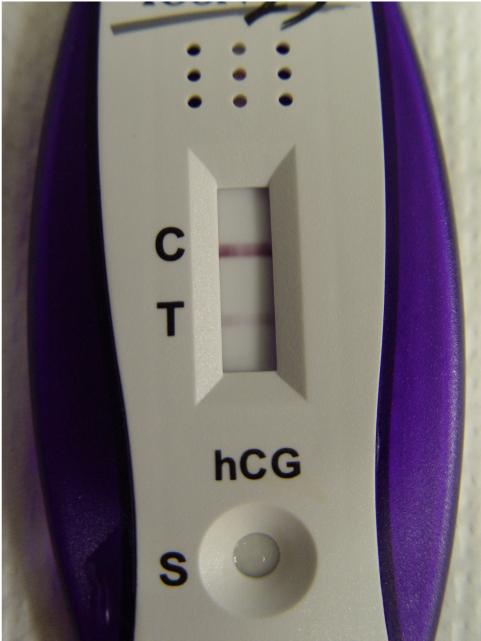
Shortly after implantation of a fertilized ovum in the uterine lining, HCG begins to be produced.
Levels of HCG approximately double every 2-3 days in a normal pregnancy.
By the time of the first missed menstrual period, pregnancy tests are usually positive (with a sensitivity of 30-35 mIU/ml).
Following a miscarriage, HCG levels initially fall quickly, then more gradually, until levels return to normal. This process takes, on average, about a month.
Urine is normally used for the test. A morning urine is more sensitive (in borderline situations) because it is more concentrated.
Serum can be used, and is equally reliable.
Elevations caused by:
Pregnancy
Gestational Trophoblastic Disease
Decreases caused by:
Miscarriage (spontaneous or induced)
Following obstetrical delivery
With resolution of an ectopic pregnancy
Normal Values:
mIU/ml
IU/L
Non-pregnant
Negative
<24
Pregnant
Positive
>25
Positive Pregnancy Test
Source: Operational Medicine 2001, Health Care in Military Settings, NAVMED P-5139, May 1, 2001, Bureau of Medicine and Surgery, Department of the Navy, 2300 E Street NW, Washington, D.C., 20372-5300